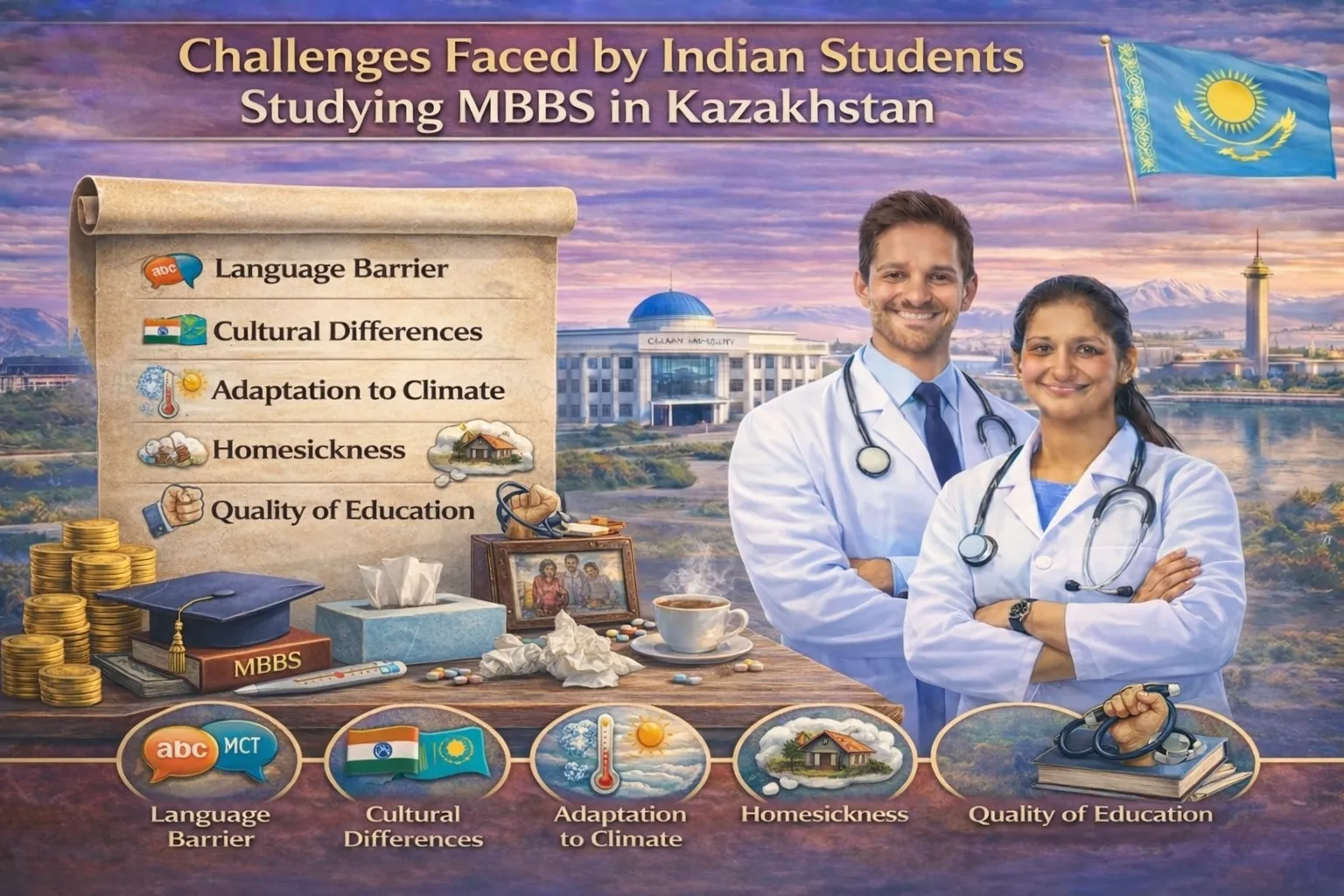
Due to the limited availability of MBBS seats and high tuition fees for private medical colleges, a large number of Indian students have started going abroad for their medical education in recent years. Kazakhstan Preferred DestinationAmong various destinations, Kazakhstan has become a preferred choice of the students due to its low tuition fee, internationally recognized universities and English medium medical courses.
There are various advantages of studying MBBS in Kazakhstan including modern infrastructure, multicultural educational ecosystems, and low living cost. Though Kazakhstan is one of the institutes for many Indian students they also face some academic and life challenges while studying in Kazakhstan, unlike in any foreign country.
Recognizing these challenges in advance can better prepare students to navigate their study-abroad experience.
Adapting to a New Climate
The climate change is one of the first challenges of many Indian students in Kazakhstan. In cities like Astana, Karaganda and Semey the country have long and very cold winters.
Winters can be extremely harsh, with temperatures dropping well below freezing point, and this could prove challenging for students from tropical backgrounds like India. It may take time to get used to the cold weather, especially in Students' first year.
Students require adequate winter clothes and are expected to figure out how to navigate the activities of daily life in inclement weather.
Language Barriers in Daily Life
Kazakh and Russian are the official languages of Kazakhstan, despite several medical universities providing MBBS programs in English.
Lectures inside the classroom are often delivered solely in English for international students. But outside the campus, communication can get complicated because local people and shop keepers do not always speak impeccable English.
Newly enrolled students in hospitals working with patients that only know the local languages may also face language barriers during training.
Cultural Adjustment
Settling into another country means learning new things, such as manners, consumption patterns and lifestyle.
Initial Culture Shock for Indian Students in Kazakhstan
Routines, traditions and lifestyles may take time to get used to. Most students eventually learn about the local culture, making it easier for them to adjust when they arrive.
Most universities also have dedicated international student communities that provide additional comfort and social connection for newcomers.
Homesickness and Emotional Adjustment
If you're studying abroad, you may find yourself as far as possible from the comfort of your social circle and even your family, and that does sometimes leave little room for homesickness — especially in the initial months by WHO.
Students might feel homesick, miss festivals and family support systems. Especially for individuals living abroad for the first time, this emotional acclimation can be difficult.
Homesickness is most often diminished by contact with family by means of internet communication and a developing friendship circle made up of peers.
Understanding the Medical Curriculum
The medical curriculum that Kazakhstan follows could be a slightly different one from what students are usually used to in India. Different universities have different teaching methods, ways of evaluating students and academic expectations from students.
Students might require an adjustment period to acclimatize to the new pedagogical approaches, practical sessions and examination formats.
At the same time, when gets into the studying pattern of the educational system; students adapt to study and write great examinations.
Licensing Requirements After Graduation
One major challenge, however, for Indian students pursuing medical education overseas is complying with licensing requirements post-graduation.
The National Medical Commission (NMC) regulates the practice of medicine in India, and students must comply with these regulations if they wish to do so. This usually includes qualifying the necessary licensing examinations to practice as a doctor in India.
Studying for these exams added on top of the MBBS course will require a lot more effort and preparation.
Clinical Communication with Patients
Hospital training and clinical exposure begins in the later years of MBBS. Patient interaction is an integral element of medical practice.
As a majority of patients in Kazakhstan speak Kazakh or Russian, students might have to learn basic local language skills for effective communication during clinical rotations.
Various universities have language classes for international students to develop such communication skills.
Managing Personal Finances
Even though Kazakhstan is more inexpensive than other countries, students have to plan their budget very well.
It is essential to budget adequately for expenses like accommodation, food, transportation and personal costs to ensure that it does not strain finances during the course.
For students who are studying abroad for years, budget planning plays a very crucial role.
Verifying University Recognition
Some students face another challenge, which is selecting the right university. Not all universities are created equal in terms of principal recognition and academic standing.
WDOMS lists all the right universities that you can refer to and see if a university follows international medical education standards. Researching before applying will save you from the hassle of dealing with degree recognition in later stages.
Final Thoughts
So as an Indian student, this is the right place you should look forward to studying MBBS in Kazakhstan. But students also need to understand the difficulties they would face while studying in a foreign country.
Initially these can be tough because of climate adjustment, language, cultural differences and licensing requirements. Most students get through these challenges and finish their medical education with enough preparation, research, and determination put forth.
Recognizing these possible challenges beforehand allows students to make informed choices and equips them for a thriving educational experience in Kazakhstan.