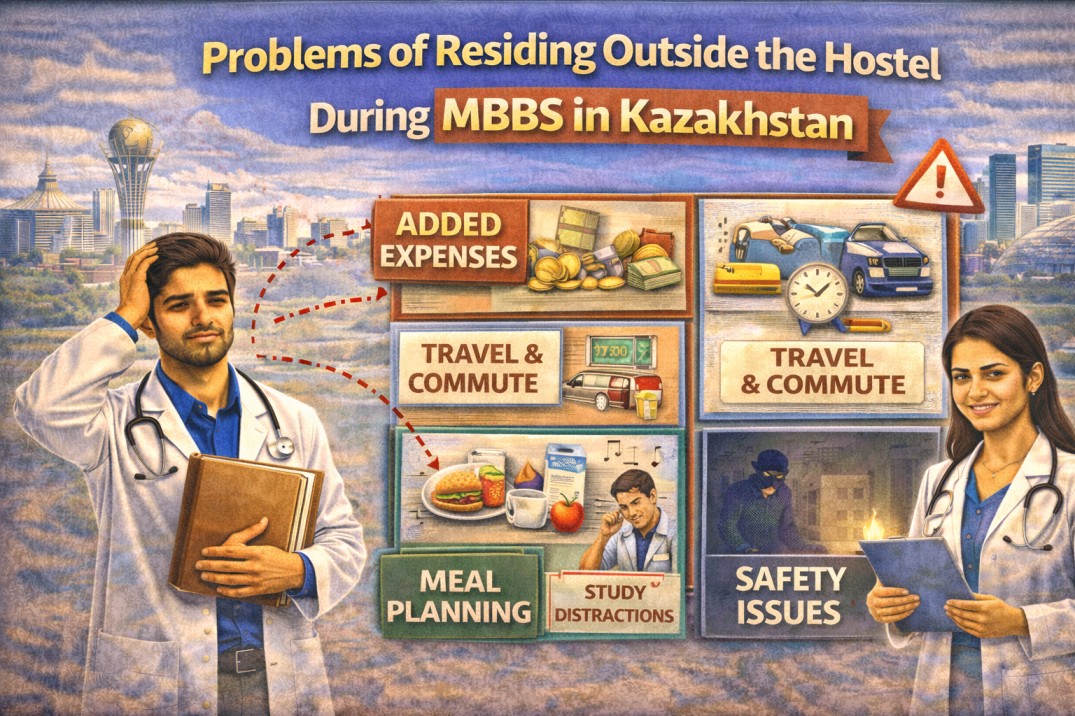
Taking admission for MBBS abroad is a life-changing decision, and Kazakhstan is one of the most famous countries among Indian medical aspirants as it offers low-cost education, world-class facilities, and worldwide recognition. Although many students opt for the university hostels, some prefer to stay off campus and rent an apartment. While living off-campus provides independence, it comes with its own set of challenges that students need to take into account when studying MBBS in Kazakhstan.
By enlightening kids and parents about these hindrances, they can make educated decisions to help promote academic success as well as personal wellness.
1. Homesickness and Unfamiliarity with New Surroundings
The transition to a foreign country, especially for students from India who are leaving the country for the first time, can be daunting. Living outside the hostel usually also implies living without a support group of peers at hand.
- Limited exposure to other medical students
- Early months and feelings of isolation
- Cultural and lifestyle challenge
Hostels, as an on-campus MBBS student community in itself, whereas off-campus housing may stave off social bonding essential for the arduous MBBS voyage.
2. Elevated Accountability and Time Management Problems
To live independently means dealing with all those everyday tasks that its hostel residents are more often than not absolved from.
- Cooking or arranging meals daily
- Cleaning, laundry, and grocery shopping
- Paying the bills and rent
Medical students have a busy academic schedule already. Juggling domestic chores as well as attending lectures, labs, and hospital rounds can be exhausting, and you may find that studying at home becomes increasingly unrewarding.
3. Language and Communication Barriers
Off the campus, students intermingle with locals, including landlords, shopkeepers, and service providers. Communication can be difficult as the main languages in Kazakhstan are Kazakh and Russian.
- Difficulty explaining issues to landlords
- Challenges during emergencies
- Reliance on translation apps or intermediaries
In hostels, the staff are generally used to international students, so it takes the stress out of communication.
4. Safety and Security Concerns
Security is a big concern among students and parents alike. University hostels are usually supervised by guards and equipped with surveillance cameras and access control systems.
Students staying outside hostels may have to face:
- Scant security in private apartments
- Unfamiliar neighborhoods
- Delayed assistance during emergencies
This creates even more apprehension among female students or students who live alone with no friends in an unfamiliar area.
5. Food and Dietary Challenges
Indian students typically find it difficult to cope with eating habits abroad. Though many times hostels offer an Indian or vegetarian menu, if one is living off campus, they have to look for food on their own.
Challenges include:
- Limited availability of Indian groceries
- Expensive to dine out often
- Time-consuming meal preparation
MBB is also a time when poor nutrition can have an impact on concentration, immune-system function, and general health.
6. Weather Adaptation and Housing Quality
Kazakhstan has severe winters, and it snows heavily. Several students do not actually realize the significance of good accommodations.
Off-campus challenges may include:
- Poor heating systems
- Higher electricity and gas bills
- Inadequate insulation in rented apartments
Most university dorm rooms can be adapted to accommodate extreme weather and keep students comfortable.
7. Transportation and Daily Commute Issues
Medical schools may be accompanied by or have a teaching hospital. Those students who are not living on campus may be experiencing:
- Long daily commute times
- Increased transportation expenses
- Difficulty attending early-morning hospital postings
Snow and ice-packed roads in the winter only add to the challenge of commuting.
8. Academic Disconnection and Missed Opportunities
While at a hostel, you may experience collaborative learning in the form of group studies, discussions, and peer support. What students living off campus might miss:
- Group revision sessions
- Late-night exam preparation with peers
- Seniors can easily be reached for any help
Teamwork is a priority in medical education, and isolation could negatively impact academic achievement in the long run.
9. Licensing and attendance compliance
Medical colleges are very strict about attendance, and you would have to be eligible for licensing exams. As per the National Medical Commission (NMC), students who graduate from universities abroad have to comply with their academic and clinical training norms before they are allowed to sit for tests in India, which can serve as conditions prescribed by NMC.
Absences due to travel or life responsibilities can also make you ineligible for tests like NExT.
10. Mental health, emotional pressure , and stress
MBBS is already mentally demanding. Living individually outside the hostel may cause more stress because of;
- Lack of emotional support
- Homesickness
- There’s so much pressure to succeed in school and then manage your personal life
Institutions, like the World Health Organization (WHO, stress that the mental welfare of medical students who are away from their home country is crucial.
Restricted Advice on Academic and Clinical Procedures
Residents in hostels usually get informal advice from wardens, seniors , and friends regarding exams, clinical postings, and university procedures. Some students with other living arrangements may also struggle to stay informed.
This can lead to:
- Confusion regarding schedules
- Missed deadlines
- Difficulty navigating hospital protocols
Recognition and Accreditation Awareness
Selecting the right college is key. Students need to check if their medical college is in the World Directory of Medical Schools (WDOMS) and is recognised by international bodies to be able to give exams for licensing regionally after completion.
Students based in hostels are usually given institutional advice, but for off-campus collegegoers, they would need to remain abreast of compliance and documentation.
Conclusion
Although studying MBBS in Kazakhstan and staying outside the hostel could give a sense of liberty and privacy, there are numerous threats you might have to confront related to security, academic stress, mental well-being, and day-to-day living. For most students from India, especially the beginners with no experience of life abroad, university hostels offer a disciplined, encouraging,g and academically positive atmosphere.
Prospective students for MBBS in Kazakhstan should consider these challenges before deciding on an off-campus stay. Choosing properly where to live has a tremendous effect on academic success, personal happiness, and future medical career possibilities.