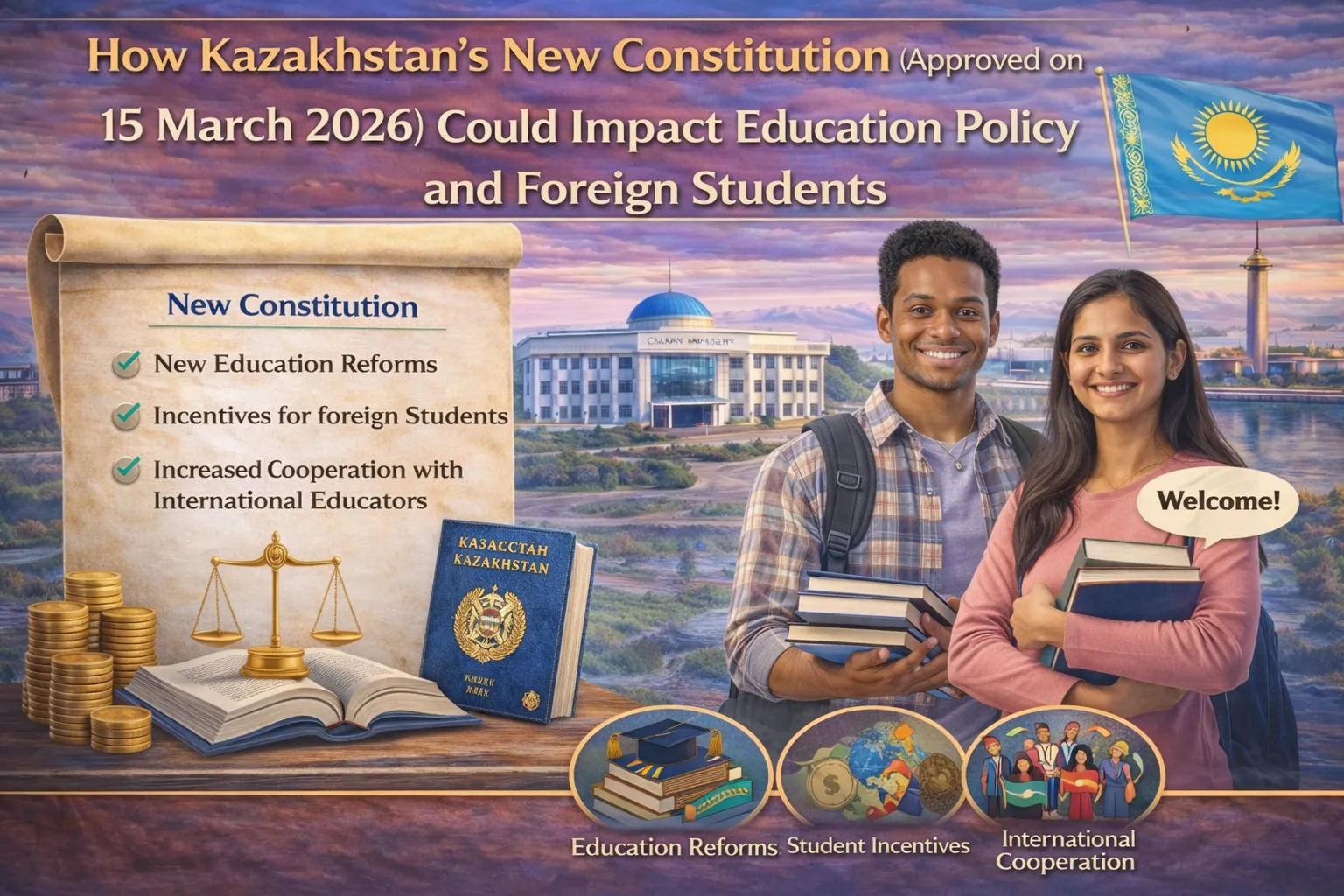
Kazakhstan held a nationwide referendum on 15 March 2026, in which about 87% of voters approved a new national constitution, with voter turnout above 73%. This new Constitution, effective from 1 July 2026, introduces structural reforms in governance that may have long-term consequences for education policy, foreign student rights, and institutional regulation. For Indian and other international students considering MBBS in Kazakhstan, understanding these changes is essential.
Key Changes in the Constitution
- Streamlined parliamentary structure: The unicameral parliament replaces the bicameral system for faster legislative processes.
- Restored heirs/patrician office: The President gains appointive powers.
- Broad presidential authority: More administrative control over legislation.
- New People’s Council: An advisory body with legislative and referendum powers.
These institutional shifts may indirectly influence higher education, including international programs, governance standards, and funding policies.
Implications for Education Policy
1. Centralization of Governance
- Education may come under stricter central oversight.
- Universities, including those hosting international students, may need to adhere to standardized national policies.
- Potential areas affected:
- Admission standards for foreign students
- Accreditation requirements
- Curriculum alignment with national standards
2. Emphasis on National Identity
- Increased focus on Kazakh language and culture.
- Potential influence on medium-of-instruction policies in some programs.
- Curriculum may include more content emphasizing national history, values, and state priorities.
3. Academic Freedom and Student Rights
- Constitutional reforms may affect freedom of expression, assembly, and campus activities.
- International students might experience:
- Limitations on activism or debate
- Constraints on certain research topics
- Structured oversight of student organizations
What This Means for International Students
- Structured University Operations: Programs may become more regulated with transparent standards.
- Degree Recognition and Quality Assurance: Enhanced oversight could strengthen global recognition of Kazakh degrees.
- Admissions and Support Policies: Ministry of Education may revise visa, residency, and foreign student support frameworks.
- International Partnerships: Bilateral agreements and recognition of foreign degrees may be influenced by constitutional priorities, affecting students planning to return to India or work globally.
Navigating the Changes
Indian and other foreign students should:
- Monitor announcements from Kazakhstan’s Ministry of Education after the constitution takes effect.
- Check how institutional regulations, student rights, and admission procedures are updated.
- Ensure that degrees WHO meet the requirements of Indian regulatory bodies like the National Medical Commission (NMC) and international listings such as WDOMS.
Final Thoughts
Kazakhstan’s new constitution marks a significant restructuring of governance with potential indirect effects on education policy.
- Opportunities: Centralized governance and standardized quality measures could provide clearer academic expectations and consistent institutional standards.
- Challenges: Shifts in academic freedom, language requirements, and policy priorities may require adaptability from foreign students.
Indian students aiming for MBBS in Kazakhstan should remain informed, flexible, and prepared to navigate evolving legal and educational frameworks.
This new constitutional landscape could shape higher education and international student experiences for years to come, making awareness and adaptability critical for success.