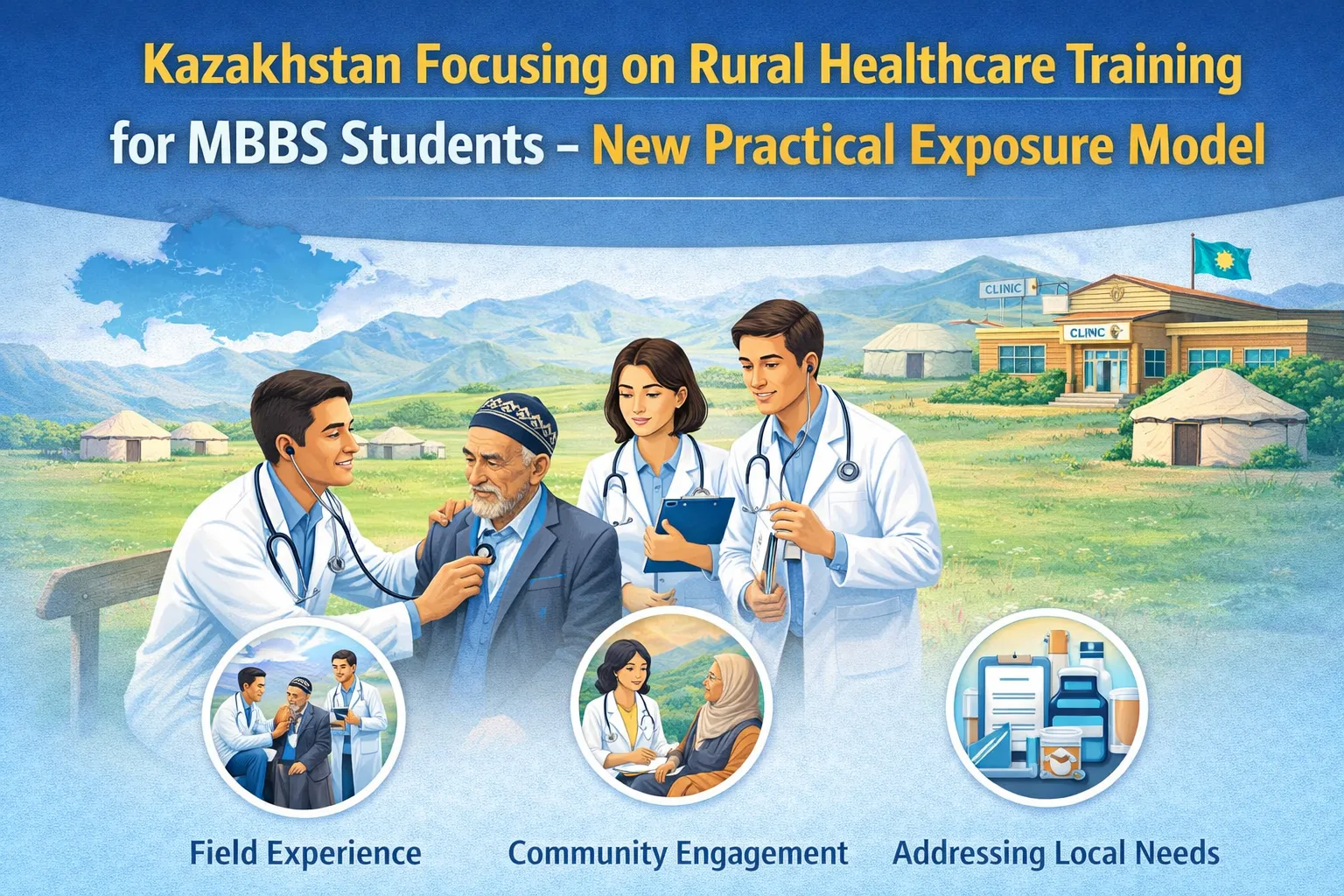
Medical education exists outside the realms of cutting-edge hospitals and sleek devices. In many ways, a skilled doctor has to be able to treat patients in all sorts of settings — even rural and resource-poor ones.
Acknowledging this, Kazakhstan is instituting a new practical exposure model in 2026 — MBBSs will receive structured training and working in rural healthcare settings.
This is a major news for the students who wants to follow MBBS in Kazakhstan. This serves as another level to medical education by linking the academic background with the practical challenges associated with healthcare.
Why Rural Healthcare Training Matters
A significant portion of the population in many countries live in rural areas, such as India and Kazakhstan. However, these regions often face:
- Limited access to hospitals
- Shortage of doctors
- Lack of advanced medical facilities
- High patient load and fewer resources
Students can benefit from instruction in such environments by:
- Develop problem-solving skills
- Managing with less resource become one of the most important lesson
- Understand real patient needs
- Build confidence in challenging situations
This kind of exposure is critical in becoming a well-rounded physician.
The New Practical Exposure Model in Kazakhstan(2026)
Kazakhstan is formally introducing rural health training in the MBBS curriculum.
This model includes:
- Mandatory rural postings
- Community healthcare programs
- Field training in local clinics
- Public health awareness campaigns
Rather than restricting education to city hospitals, universities are taking learning into real community settings.
What Is Being Done to Develop Rural Training
Kazakhstan medical universities are training their students in a way where they get good experience.
Rural Clinical Rotations
Students are assigned to:
- Village clinics
- Community health centers
- Small district hospitals
Here, they learn and assist in patients’ care under supervision.
Community Health Programs
Students participate in:
- Vaccination drives
- Health awareness campaigns
- Disease prevention programs
It opens their eyes to public health at the grass-roots level.
Exposure to Diverse Medical Conditions
Rural hospitals are often faced with different health challenges than those in cities.
Students encounter:
- Infectious diseases
- Nutritional deficiencies
- Maternal and child health issues
This broadens their clinical knowledge.
Practical Decision-Making Training
Doctors in rural settings do not have luxury of advanced diagnostic tools all the time.
Students learn to:
- Make decisions based on symptoms
- Prioritize treatments
- Handle emergencies with limited resources
Benefits for MBBS Students
The new model of training for rural healthcare provides a few key benefits.
Real-World Medical Experience
Unlike students who are exposed only to simulated environments, students learn to apply their skills in actual healthcare setting.
Strong Clinical Confidence
Building confidence through facing real challenges prepares students for autonomous practice.
Better Understanding of Public Health
Students learn about how diseases are spread and can be contained within communities.
Improved Problem-Solving Skills
Being Resourceful — To Be Innovative And Think Outside The Box.
Global Career Advantage
Globally, doctors with experience in rural healthcare are in high demand, especially as most countries have a focus on community health.
Special Benefits for Indian Students
Most Indian students pursuing MBBS in Kazakhstan make a lot out of this model.
Similar Healthcare Challenges
And India has a huge rural population, too. You’re training on data until October of 2023.
- Understand similar patient conditions
- Easily adapt when back in India
Alignment with NMC Guidelines
First, the National Medical Commission (NMC) promotes practical training and community exposure.
To meet these expectations, students gain experience in rural healthcare.
Better Preparation for Licensing Exams
Exposure to real cases improves:
- Clinical reasoning
- Diagnostic ability
- Exam performance
Integration with Global Standards
Kazakhstan’s effort to train rural healthcare providers fits with similar goals worldwide.
Many universities, providing MBBS in Kazakhstan recognized in World Directory of Medical Schools (WDOMS) are following healthcare approaches supported by WHO and focus on :
- Community-based healthcare
- Preventive medicine
- Accessible healthcare services
Real Impact on Medical Education
This new method is changing the way medical students study.
From Hospital-Centric to Community-Centric Learning
Students no longer leave behind hospitals — they work directly with communities.
From Theory to Practice
By exposing them to the real world of business, students can better utilize their book knowledge.
Individual Learning to Social Responsibility
With opportunities to serve and lead, students develop a sense of responsibility for society and members of underutilized populations.
Challenges of Rural Healthcare Training
Despite many advantages, students must consider some challenges too.
Limited Facilities
Rural areas tend to have less advanced equipment, which can be an initial struggle.
Harsh Working Conditions
Students might have to adjust to:
- Basic infrastructure
- High patient load
- Limited resources
Cultural and Language Barriers
This could involve cultural sensitivity and the ability to communicate effectively with local people.
Kazakhstan’s commitment to rural healthcare can only go up from here.
Future developments may include:
- Mobile healthcare units for training
- Telemedicine integration in rural areas
- International rural exchange programs
- Advanced public health research opportunities
This will lead to more inclusive and impactful medical education.
Why This Trend Matters
Healthcare isn’t simply about curing diseases — it’s about accessing all patients, irrespective of region.
Rural healthcare training ensures students of:
- Become adaptable doctors
- Understand real-world challenges
- Develop empathy and responsibility
Final Thoughts
This move by Kazakhstan to train its medical graduates as rural health professionals is a major step toward more relevant and practical education. It demonstrates a strong dedication to training not just competent physicians but also thoughtful and flexible caregivers.
This new model of practical exposure is a gateway for students preferring MBBS in Kazakhstan to gain the experience that goes beyond textbooks and classes.
Ultimately the best doctors are those who can treat patients anywhere — and Kazakhstan is training its students to do just that.