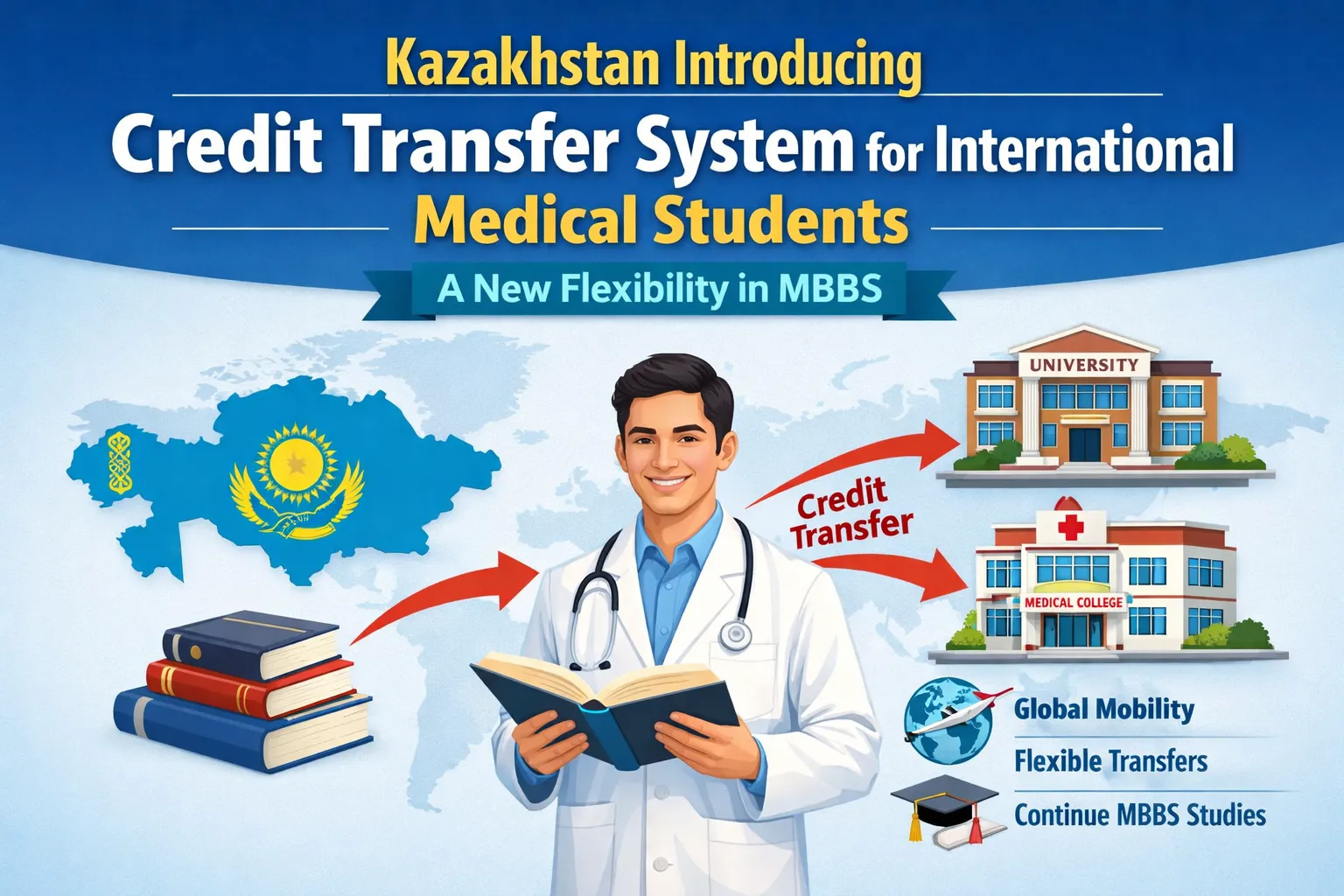
Kazakhstan is once again making news with a reform in medical education abroad that makes it more student-friendly. In 2026, the nation is heading towards implementing an international student credit transfer for medical students, initiating a unique and flexible approach to anatomical education.
Students who aim for MBBS in Kazakhstan the development can revolutionise how to perceived their academic journey — more flexible, global and studentcentral.
What Is a Credit Transfer System?
Credit transfer system: Students are acknowledged for the credits accumulated at another university that they choose to attend, so long as it is an accredited one.
In simple terms:
👉 A student completing part od MBBS from one university may continue from the same position in another recognized university.
This system is common in countries such as the USA, Canada and Europe but new to many popular medical education destinations — Kazakhstan among them.
Why Kazakhstan Is Implementing This System
Kazakhstan is keen on developing its education system and attracting more international students. The implementation of a credit transfer system is part of a broader vision:
- Aligning with global education standards
- Increasing flexibility for international students
- Enhancing international collaborations
- Making universities more student-friendly
Following the increasing popularity of MBBS, Kazakhstan introduced reforms that cover various aspects of higher education, so as to eliminate cumbersome procedures and also enable ensure the country stays competitive in the global educational market.
How the Credit Transfer System Works
Note that the specifics of this implementation might differ across universities, however the unifying framework looks something like this:
- Credit-Based Learning: A subject or module has a definite number of academic credits
- Credit Transfer Recognition Framework: Credits recognized at all partnering universities
- Transferability: Transfer of credits is subject to meeting both academic and regulatory requirements
This allows students, even if transferring to other colleges, to continue their education without losing an academic semester.
Impact on MBBS Aspirants
A credit transfer system is an important feature which proves beneficial for the students in several ways.
Greater Academic Flexibility
Students will no more be tied to one institution for the entire phase of MBBS.
If needed, they can:
- Shift to another university
- Propelled them to continue their education without wasting years
- Adapt to better opportunities
This flexibility is a huge positive, particularly for international students.
Reduced Academic Risk
There is uncertainty while studying abroad — personal, academic and so forth.
With a credit transfer system:
- Students have a backup option
- Academic progress is protected
- Decrease risk of wasting time and money
Opportunity for Global Exposure
In fact, a very exciting advantage could be studying in different countries or even different institutions.
For example:
- Start MBBS in Kazakhstan
- Moving credits to a partner univeristy
- Gain international exposure
This makes it a more vibrant, globally connected educational experience.
Better Alignment with Global Standards
Most of the univerities offering MBBS in Kazakhstan are already listed under World Directory of Medical Schools (WDOMS) and follow International academic structures.
This is reinforced by the credit transfer system via:
- Making degrees more globally compatible
- Supporting international mobility
- Enhancing academic recognition
Improved Learning Experience
Students can pick rebate if based on:
- Teaching quality
- Clinical exposure
- Facilities
If they find a better fit elsewhere, they can now move — something that was very difficult until now.
What It Means for Students From India
In Kazakhstan, Indian students constitute a substantial percentage of international medical students.
This new system is great news for them.
Flexibility Without Losing Time
If a student is having problems such as:
- Personal emergencies
- Academic challenges
- University dissatisfaction
They can pick up their studies without losing years of study.
Better Preparation for India
National Medical Commission (NMC) has laid down certain guidelines for students returning to India.
With credit transfer:
- We also can choose better universities that are relevant to NMC requirements.
- Increase their chances of passing licensing exams
More Control Over Education
Earlier, students could not exercise in greater independence in their academic process.
Challenges and Limitations
Although the system has a lot of benefits, students should also be aware of its limitations.
Not All Credits May Transfer
Credit transfer depends on:
- University policies
- Course compatibility
- Academic performance
Not all credits might transfer in their entirety.
Limited Partner Universities
The system may start working only between handpicked colleges or in collaboration with partner institutions.
Documentation and Approval Process
Students will need:
- Proper academic records
- Approval from both universities
- Visa and regulatory compliance
Question 4: Which role has technology played in providing an alternative for credit transfer?
Kazakhstan is also bringing technology into its education system.
You are Rich text The credit transfer system is expected to be backed by:
- Digital academic records
- Online verification systems
- AI-based evaluation tools
This allows the transfers to be smoother and more transparent.
Kazakhstan Aim to Become a Center of Excellence for MBBS Education
Credit transfer is a clear indication that Kazakhstan is heading towards a modern, flexible and differentiated education system.
What to look forward to in the next few years:
- More international collaborations
- Dual-degree programs
- Exchange opportunities
- Hybrid learning systems
This evolution positions MBBS in Kazakhstan as one of the most popular choices today.
Why This Reform Matters
So what does this have to do with medical education? Additionally, students need flexibility, support and opportunities for adaptation.
The credit transfer system provides:
- Freedom to pursue new academic opportunities
- Security against unexpected challenges
- Opportunities for global exposure
It replaces the immutability of medical education with dynamic variability in its journey.
Final Thoughts
Kazakhstan has now introduced a credit transfer system for international medical students in a significant step towards modernizing medical education. It demonstrates a marked change to being student-focused, internationalized and academically flexible.
This reform has provided a fresh breath of air and assurance for students aspiring to pursue MBBS in Kazakhstan. This means their education is not just economical and recognized but also continues to meet changing needs. Use tools like NEET Rank Predictor for better planning.
As Kazakhstan develops to become an international education hub, these kind of initiatives will help shape the future of medical education as a whole.