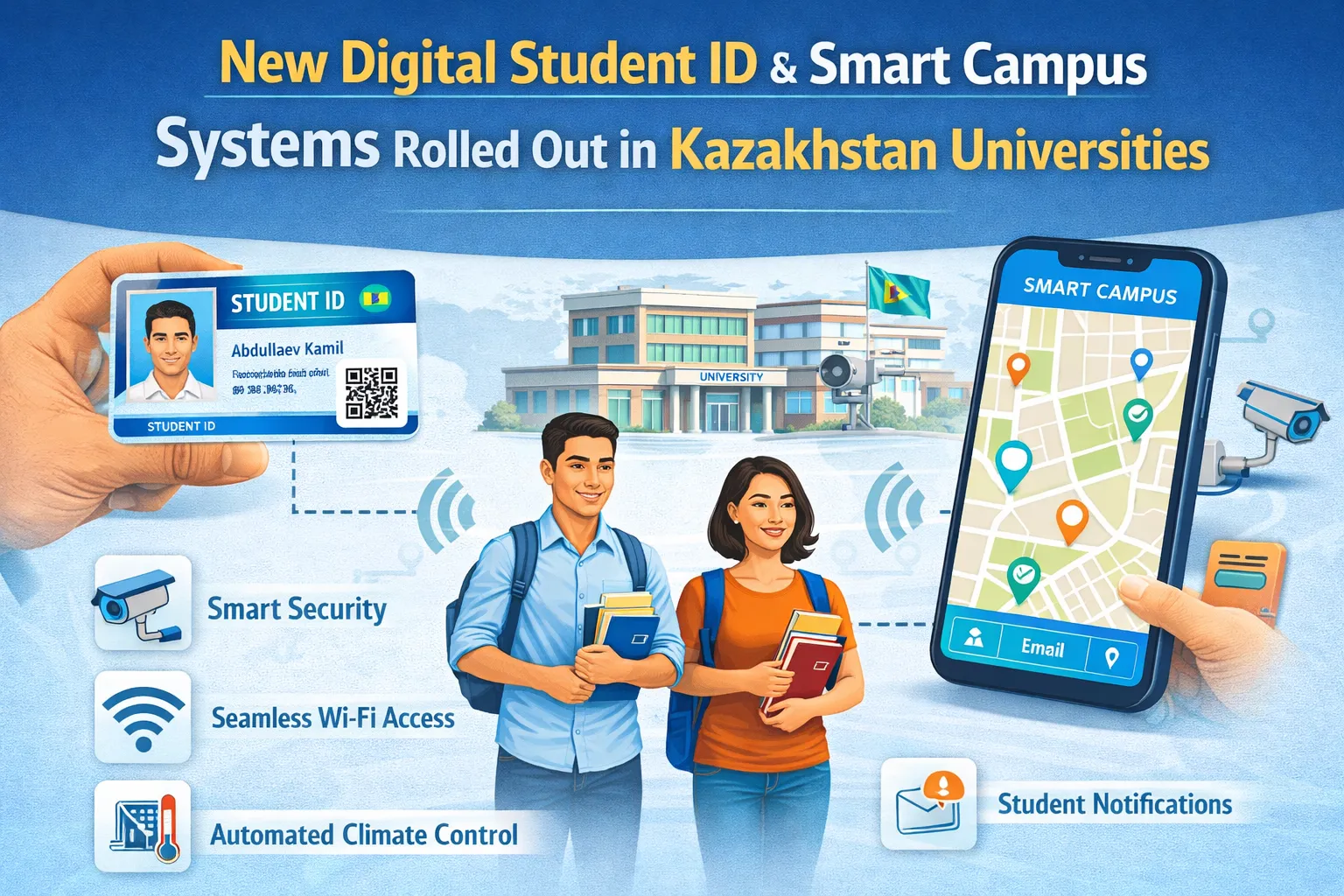
The future of education is no longer just about classrooms and textbooks — it’s about technology, convenience, and smart systems that enhance the overall student experience. In 2026, Kazakhstan has taken a major step forward by introducing Digital Student IDs and Smart Campus Systems across its universities.
For students planning to pursue MBBS in Kazakhstan, this transformation is more than just a technological upgrade — it’s a complete shift toward a modern, efficient, and globally aligned education environment.
What Is a Digital Student ID?
A Digital Student ID is an electronic version of a traditional student card. Instead of carrying a physical card everywhere, students can now access their identity through:
- Mobile apps
- QR codes
- NFC-enabled smart cards
- University portals
This digital identity becomes a multi-purpose tool that connects students to almost every campus service.
What Are Smart Campus Systems?
A Smart Campus integrates technology into daily university operations. It uses digital tools, automation, and data systems to improve how campuses function.
This includes:
- Automated attendance tracking
- Smart classrooms
- Digital libraries
- Cashless payments
- Online academic management
Kazakhstan universities are rapidly adopting these systems to create a seamless student experience.
Why Kazakhstan Is Moving Toward Smart Campuses
Kazakhstan is actively modernizing its education sector to attract international students and match global standards.
For students choosing MBBS in Kazakhstan, this shift reflects:
- Commitment to innovation
- Improved student convenience
- Alignment with global education systems
- Better transparency and efficiency
Universities recognized in the World Directory of Medical Schools (WDOMS) and aligned with global healthcare standards supported by the WHO are increasingly integrating such technologies.
Key Features of Digital Student ID Systems
The new digital ID system is not just for identification — it offers multiple functionalities.
1. Campus Access Control
Students can use their digital ID to:
- Enter hostels and academic buildings
- Access restricted areas like labs
- Ensure security within campus
This enhances both safety and convenience.
2. Attendance Tracking
Smart systems automatically record attendance when students:
- Enter classrooms
- Scan QR codes
- Use biometric systems
This eliminates manual attendance and reduces errors.
3. Cashless Payments
Digital IDs can be linked to payment systems, allowing students to:
- Pay for food in cafeterias
- Use vending machines
- Access printing and other services
This creates a fully cashless campus environment.
4. Library and Academic Access
Students can use their digital ID to:
- Borrow books from libraries
- Access digital resources
- Log into academic portals
Everything becomes faster and more efficient.
5. Transportation and Entry Systems
In some universities, digital IDs are also used for:
- Campus transport access
- Parking systems
- Event entry
This integration simplifies daily life for students.
Smart Campus Systems Transforming Student Life
Beyond digital IDs, smart campus systems are changing how students interact with their environment.
1. Smart Classrooms
Classrooms are now equipped with:
- Interactive boards
- Digital learning tools
- Online lecture integration
This makes learning more engaging and effective.
2. Online Academic Management
Students can manage everything digitally:
- Course registration
- Exam schedules
- Results and transcripts
No need for long queues or paperwork.
3. Real-Time Notifications
Universities can send instant updates about:
- Class changes
- Exam announcements
- Emergency alerts
This ensures students stay informed at all times.
4. Integration with Simulation and Practical Labs
For medical students, smart systems are connected with:
- Simulation labs
- Digital patient records
- Training modules
This enhances practical learning in MBBS programs.
Benefits for MBBS Students
The introduction of digital IDs and smart campuses offers several advantages.
1. Convenience and Time Saving
Students can manage multiple tasks through a single platform, saving time and effort.
2. Enhanced Security
With controlled access and digital tracking, campuses become safer for international students.
3. Better Learning Experience
Technology-driven classrooms and systems improve overall academic quality.
4. Preparation for Modern Healthcare Systems
Digital systems in universities mirror those used in hospitals, helping students prepare for real-world medical environments.
5. Advantage for Indian Students
Indian students pursuing MBBS in Kazakhstan benefit significantly from these systems.
They help students:
- Adapt to digital healthcare systems
- Prepare for modern medical practices
- Align with expectations set by the National Medical Commission (NMC)
Real-World Impact of Smart Campus Systems
These technologies are not just for convenience — they create a more efficient and transparent system.
Students experience:
- Faster administrative processes
- Reduced paperwork
- Better communication with faculty
- Improved campus management
This results in a smoother and more productive academic journey.
Challenges to Consider
While smart systems offer many benefits, there are a few challenges.
1. Technology Dependence
Students must rely on digital systems, which require:
- Stable internet
- Device access
2. Learning Curve
Some students may take time to adapt to new technologies.
3. Data Privacy Concerns
Universities must ensure:
- Secure handling of student data
- Protection against cyber threats
Future of Smart Campuses in Kazakhstan
The introduction of digital IDs is just the beginning.
In the coming years, Kazakhstan universities may adopt:
- AI-based campus management
- Facial recognition systems
- Smart hostels with automated controls
- Fully integrated digital ecosystems
This will further enhance the value of pursuing MBBS in Kazakhstan.
Why This Trend Matters
Education is no longer just about degrees — it’s about experience, efficiency, and adaptability.
Smart campus systems ensure that students:
- Learn in a modern environment
- Develop digital skills
- Experience global standards
Final Thoughts
The rollout of Digital Student IDs and Smart Campus Systems in Kazakhstan universities marks a major step toward the future of education. It reflects a clear commitment to innovation, efficiency, and student satisfaction.
For students planning MBBS in Kazakhstan, this transformation offers a significant advantage. It not only improves daily life but also prepares them for a healthcare industry that is increasingly digital and technology-driven.
Kazakhstan is no longer just an affordable destination — it is becoming a smart, modern, and globally competitive education hub.