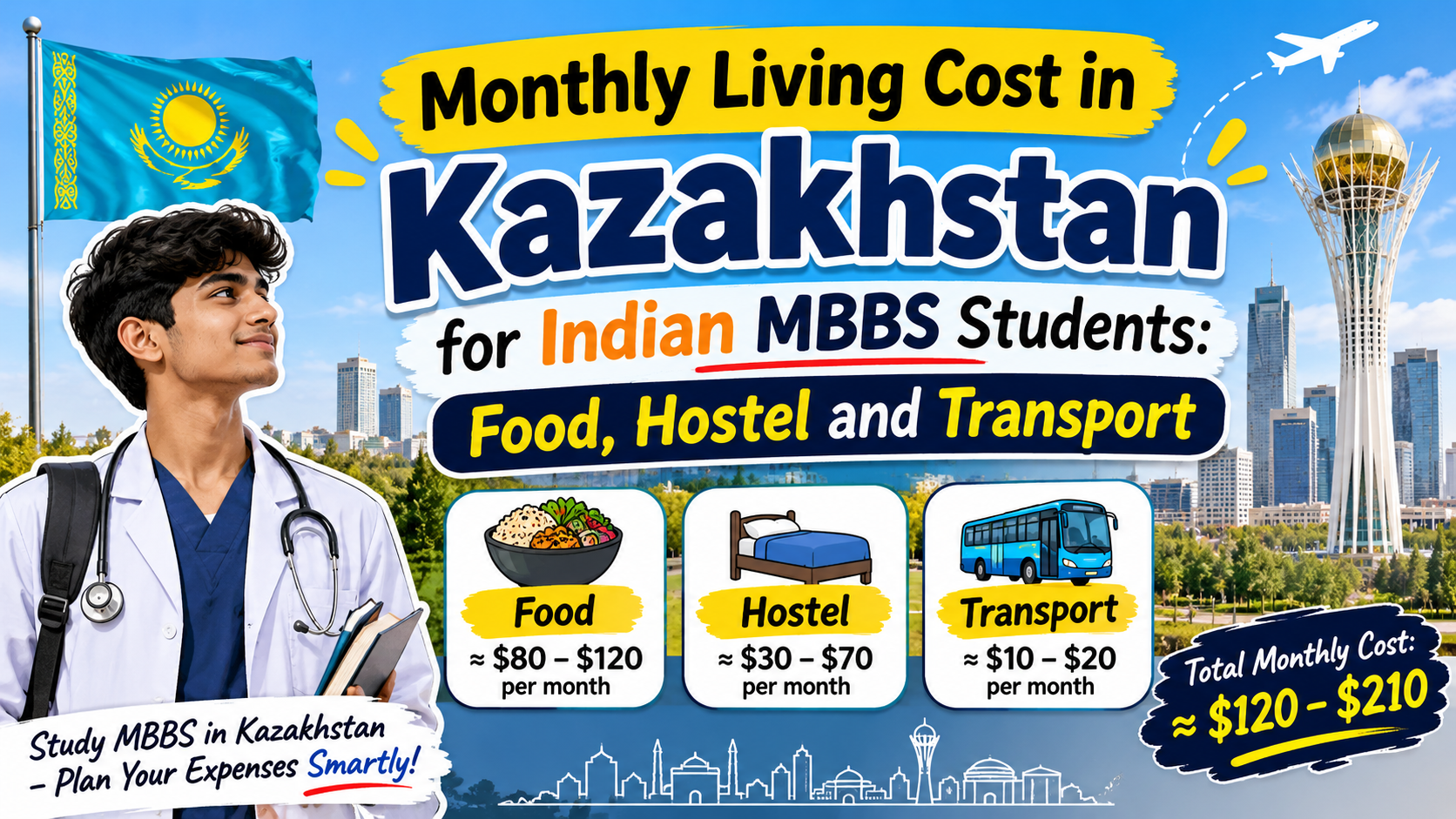
Monthly Living Cost in Kazakhstan for Indian MBBS Students: Food, Hostel and Transport
Moving to Kazakhstan for medical studies involves more than paying university tuition fees. Indian students also need to plan their monthly expenses, including hostel accommodation, food, local transportation, mobile services, study materials and personal needs. Understanding these expenses before travelling can help students and parents prepare a realistic budget for the academic year 2026–27. Kazakhstan attracts Indian medical students because it offers several universities, international student communities and different accommodation options. Students can choose university hostels, private dormitories or shared apartments depending on their preferences and financial situation. Daily expenses also vary between cities such as Almaty, Astana, Karaganda and Semey. According to the official Study in Kazakhstan platform, estimated living expenses can range from approximately USD 300 to USD 600 per month, depending on the city, housing arrangement and lifestyle. This is a general planning estimate, not a fixed amount charged to every student.
This guide explains the main monthly expenses Indian MBBS students may face in Kazakhstan, how food and accommodation affect the budget, and practical ways to manage everyday spending.
1. Understanding Monthly Living Costs in Kazakhstan
The monthly cost of living depends on where a student stays and how they manage daily activities. Students living in university hostels and using public transport may spend less than those renting private apartments and regularly eating outside.
The main monthly expense categories include:
- Hostel or apartment rent.
- Groceries and regular meals.
- Public transportation.
- Mobile recharge and internet.
- Laundry and personal care.
- Books and study materials.
- Entertainment and miscellaneous expenses.
Students should prepare a monthly budget separately from their tuition fee plan. University tuition, admission fees and other academic payments should not be confused with regular living expenses.
Students planning to study MBBS in Kazakhstan should consider both educational expenses and everyday living costs before selecting a university.
2. Hostel and Accommodation Costs in Kazakhstan
Accommodation is usually one of the most important parts of a student's monthly budget. Indian students generally consider university hostels because they are convenient and may be more affordable than renting a private apartment.
The official Study in Kazakhstan accommodation guide provides the following indicative monthly ranges. Actual prices depend on availability, location and room facilities.
|
Accommodation type |
Approximate monthly cost |
|
University dormitory |
USD 30–70 |
|
Private dormitory |
USD 100–250 |
|
Private apartment rental |
USD 100–300, plus applicable utilities and internet |
University Hostel Accommodation
University hostels are often a practical choice for international students, particularly during the first year. Rooms may be shared by two to four students, and facilities can include furnished rooms, shared kitchens, internet access and security arrangements.
Before accepting a hostel place, students should verify:
- Monthly or semester accommodation charges.
- Number of students sharing a room.
- Availability of heating during winter.
- Kitchen and laundry facilities.
- Internet availability.
- Security and visitor policies.
- Distance from classrooms and hospitals.
Hostel availability is not guaranteed at every university. Students should apply through the official accommodation process and confirm their room before travelling.
Private Dormitories
Private dormitories may offer additional comfort, furnished rooms and greater privacy. Some provide shared kitchens, Wi-Fi and security facilities.
They may be suitable for students who prefer a more independent living arrangement but do not want to rent an entire apartment. However, students should compare the total monthly charges and check whether electricity, heating and internet are included.
Private Apartments
Renting a private apartment provides more independence, but it can increase monthly expenses. Students may also need to pay a security deposit, utility bills and internet charges.
Sharing an apartment with other students can reduce the rent per person. Before signing an agreement, check the rental contract, payment schedule, landlord information and rules regarding deposits.
Example: Astana Medical University Hostel
Astana Medical University publishes specific accommodation charges for its student residences. Its official information for 2026–27 lists accommodation at 315,000 KZT for nine months for first-year students and 225,000 KZT for nine months for senior students, subject to the university's allocation and application process.
This demonstrates that hostel fees can vary significantly between universities and even between student years. Always check the latest university notice rather than assuming that one hostel price applies throughout Kazakhstan.
3. Monthly Food Expenses for Indian Students
Food is another major part of monthly spending. Indian students may need time to adjust to local cuisine, so planning meals in advance can help them maintain their preferred diet without spending unnecessarily.
Students commonly have three options:
- Preparing food in a shared hostel kitchen.
- Eating at university cafeterias or local canteens.
- Purchasing food from Indian restaurants or food services.
Cooking at Home
Preparing food at home is usually a budget-friendly option. Students can purchase groceries and cook familiar dishes such as rice, dal, vegetables, eggs and simple chicken preparations.
Common grocery items include:
- Rice, flour and bread.
- Lentils and pulses.
- Eggs and dairy products.
- Chicken and other available protein sources.
- Seasonal vegetables and fruits.
- Cooking oil, spices and basic ingredients.
Students can reduce food expenses by sharing grocery purchases with roommates and preparing meals in larger quantities.
University Canteens
University canteens may be convenient on busy academic days. Students can purchase breakfast, lunch or snacks without travelling far from campus. Before depending on a canteen, check its opening hours, menu, prices and availability of suitable meals. Students with specific dietary preferences should also explore nearby grocery stores and food options.
Indian Food Options
Students who prefer Indian food may find restaurants, grocery shops or Indian food services in some major cities. However, regularly purchasing prepared Indian meals may increase the monthly food budget.
A practical approach is to cook most meals and eat outside occasionally.
Recommended Monthly Food Budget
For initial planning, students can use these approximate spending bands:
|
Food arrangement |
Suggested monthly budget |
|
Mostly home-cooked meals |
USD 100–150 |
|
Home cooking with occasional canteen meals |
USD 130–180 |
|
Frequent restaurant or takeaway meals |
USD 180–250 or more |
These are illustrative budgeting ranges, not official university charges. Actual grocery prices and food expenses vary by city, season and personal preferences.
4. Transportation Costs in Kazakhstan
Transportation is an important consideration, especially for students whose hostels are located far from university buildings or medical training facilities. Kazakhstan has public transport options such as buses, trolleybuses and, in Almaty, a metro system. Students living close to their university may save money by walking to classes.The official Study in Kazakhstan platform suggests that an average public transport journey may cost around 100–150 KZT per ride. Actual fares and payment methods should be checked locally.
Public Buses
Buses are commonly used for daily travel. Students can use them to reach universities, shopping areas, grocery stores and other parts of the city.
Metro in Almaty
Almaty has a metro system that can be useful for students living near its stations. It can help reduce travel time and avoid road traffic on certain routes.
Taxis and Ride-Hailing Services
Taxi and ride-hailing services are convenient for late-night travel, bad weather or occasional journeys. However, using taxis every day can increase monthly expenses.
How to Save on Transport
- Choose accommodation close to the university.
- Learn the main bus routes.
- Check student discounts and transport cards.
- Walk for short distances when practical.
- Use taxis only when necessary.
- Confirm whether the university provides a shuttle service.
Students should not assume that a university shuttle is included in their admission package. Verify its availability and charges directly with the institution.
5. Mobile, Internet and Other Monthly Expenses
Apart from food, accommodation and transport, students should budget for communication and regular personal needs.
|
Expense |
What it covers |
|
Mobile recharge |
Calls, SMS and mobile data |
|
Internet |
Hostel or apartment Wi-Fi |
|
Laundry |
Washing and drying clothes |
|
Toiletries |
Personal hygiene and skincare |
|
Stationery |
Notebooks, pens and study supplies |
|
Entertainment |
Occasional outings and activities |
|
Miscellaneous |
Small purchases and unexpected expenses |
Students should compare mobile network packages after arrival and check whether hostel internet is included in the accommodation fee.
Medical textbooks, instruments and other academic materials may also require a separate budget. These expenses can vary depending on the year of study and university requirements.
6. City-Wise Living Cost Considerations
The cost of living can vary depending on the city where students pursue their medical education. Housing availability, transport facilities, food options and lifestyle all affect monthly spending.
Almaty
Almaty is a major educational and cultural centre. Students can find universities, grocery stores, restaurants, public transport and student facilities. However, accommodation choices and neighbourhoods may have different rental costs.
Astana
Astana offers established educational institutions and student facilities. Students should plan for cold winters, heating requirements and appropriate winter clothing. Hostel availability and the distance between accommodation and university buildings should also be checked.
Karaganda
Karaganda is another city considered by international medical students. Students should compare hostel fees, local food expenses, transport routes and university facilities before finalising accommodation.
Semey
Semey offers another option for students exploring medical education in Kazakhstan. Before admission, check the university's hostel facilities, academic environment and availability of nearby grocery stores and transport. The cheapest city is not always the best choice. Students should balance living costs with university quality, clinical training, accommodation standards and personal safety.
7. Sample Monthly Budget for an Indian MBBS Student
The following table provides an illustrative budget for a student using shared or university accommodation and managing regular expenses carefully.
|
Monthly expense |
Estimated amount (USD) |
|
Hostel accommodation |
30–70 |
|
Meals and groceries |
100–150 |
|
Local transportation |
15–30 |
|
Mobile and internet |
5–15 |
|
Laundry and toiletries |
10–20 |
|
Study materials and miscellaneous |
20–40 |
|
Estimated total |
180–325 |
This is a sample calculation, not a guaranteed monthly cost. It excludes tuition fees, international flights, major medical expenses, visa-related payments and other one-time expenses. Private accommodation, frequent restaurant meals or higher personal spending can increase the overall cost. For a broader planning estimate, the official Study in Kazakhstan platform suggests approximately USD 300–600 per month for living expenses. Students should use the wider range when preparing a financial plan and verify actual costs with their university.
8. Additional Expenses Students Should Plan For
Some expenses do not occur every month but can affect the overall education budget.
These may include:
- Visa processing and migration registration.
- Medical examinations and health certificates.
- Medical insurance.
- Winter jackets, boots and seasonal clothing.
- Hostel deposits and initial accommodation payments.
- International and domestic air tickets.
- Textbooks and medical instruments.
- Emergency travel and unexpected expenses.
Indian students should also understand the university's payment arrangements and keep copies of receipts and official documents.
Before travelling, students should review the applicable foreign medical education requirements published by the National Medical Commission (NMC). They can also consult the World Directory of Medical Schools (WDOMS) for medical school information and the World Health Organization (WHO) for global health information.
These resources serve different purposes. A WDOMS listing alone does not guarantee eligibility for medical registration in India.
Students should also check the applicable NEET qualification requirements through the official NEET NTA website before applying to a foreign medical programme.
9. Practical Tips to Manage Monthly Expenses
Students can control their spending by following some simple habits.
Prepare a Monthly Budget
Set separate limits for accommodation, food, transport and personal expenses. Track spending regularly to avoid exceeding the budget.
Choose Suitable Accommodation
A university hostel or shared apartment near campus can reduce rent and daily commuting costs.
Cook Regularly
Preparing food at home can help reduce restaurant expenses. Sharing grocery purchases with roommates may also make everyday shopping more economical.
Use Public Transport
Learn local routes and check available student concessions. Use taxis only when necessary.
Share Essential Purchases
Roommates can share the cost of groceries and household items where practical.
Monitor Spending
Maintain a record of daily purchases to identify unnecessary expenses and improve financial planning.
Keep Emergency Savings
Set aside money for medical needs, travel and unexpected expenses. Emergency savings can help students manage situations without disturbing their regular monthly budget.
10. What Should Parents Check Before Sending Money?
Parents should verify accommodation and monthly expenses before the student travels to Kazakhstan.
Important questions include:
- Is university hostel accommodation available for international students?
- What is the official hostel charge for the academic year?
- Are heating, electricity, water and internet included?
- How many students share each room?
- Is the hostel close to the university and clinical training locations?
- Are meals available on campus?
- What are the local transport options?
- Are there additional deposits or maintenance charges?
- What is the hostel refund policy?
- Who should students contact if they face accommodation problems?
Parents should request official information directly from the university and keep copies of fee receipts, accommodation confirmations and relevant communication.
Frequently Asked Questions (FAQs)
1. What is the monthly living cost in Kazakhstan for Indian MBBS students?
The monthly cost depends on accommodation, food, transport and lifestyle. The official Study in Kazakhstan platform provides a broad estimate of USD 300–600 per month. Students should prepare a city-specific budget.
2. How much does a hostel cost in Kazakhstan?
The official Study in Kazakhstan accommodation guide indicates university dormitory costs of approximately USD 30–70 per month. Actual charges vary by university, room type and availability.
3. Is food expensive in Kazakhstan for Indian students?
Food expenses can be manageable when students prepare meals at home and purchase groceries. Regularly eating at restaurants or ordering prepared Indian food may increase monthly spending.
4. Is public transport affordable in Kazakhstan?
Public transport can be an economical option for students. The official Study in Kazakhstan platform indicates typical bus and metro fares of around 100–150 KZT per ride, although local fares may change.
5. Can Indian students cook their own food in Kazakhstan?
Many student accommodation options provide shared kitchens, but facilities differ by university and hostel. Students should confirm kitchen access and cooking rules before booking accommodation.
6. Which city is cheaper for Indian MBBS students?
Living expenses vary across Almaty, Astana, Karaganda and Semey. Students should compare actual hostel charges, food availability, transport and personal requirements rather than selecting a city based only on its general reputation for affordability.
Conclusion
Monthly living expenses are an important part of planning medical education in Kazakhstan. Indian MBBS students should consider hostel accommodation, food, transport, mobile services, study materials and personal spending before travelling. University hostels, home-cooked meals and public transport can help students manage their budgets. However, actual expenses depend on the city, accommodation type and lifestyle. Parents should confirm current charges directly with the university and keep additional funds for emergencies and one-time expenses. A realistic monthly budget helps students focus on their medical studies while managing their financial responsibilities. Before choosing a university, compare accommodation facilities, transport access and student support alongside tuition fees and academic requirements.