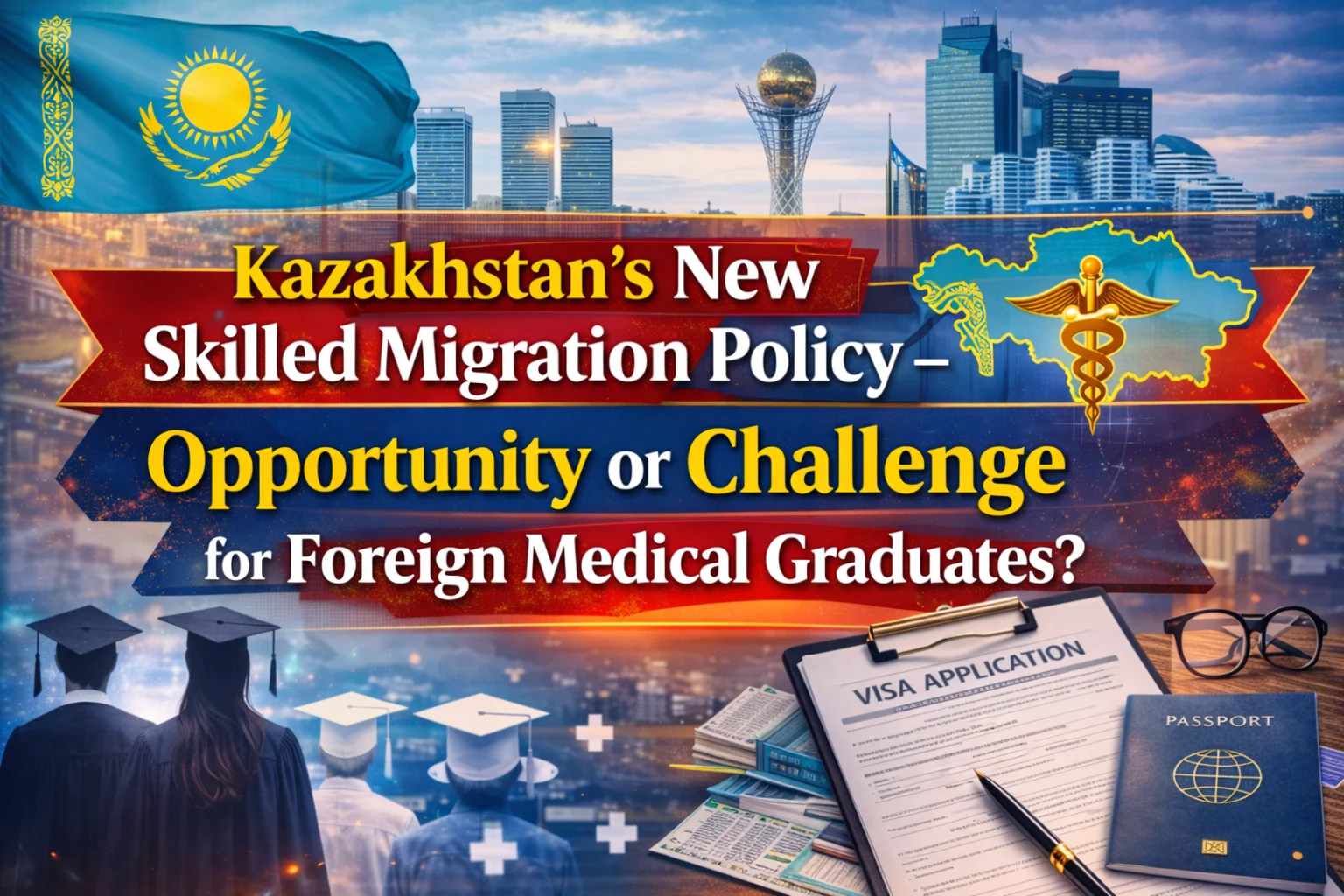
In a rapidly changing world, migration policies can “make or break” careers — particularly in specialized sectors such as medicine. Kazakhstan revamped its skilled migration policy in 2026, focused on managing what the country will do with foreign professionals generally to include medical doctors trained abroad
Indian students interested in pursuing MBBS degrees, or careers after MBBS in Kazakhstan need to be aware of these policy changes. Is this a window of opportunity for change? Or do they throw up obstacles to foreign medical graduates?
This blog discusses the new migration strategy of Kazakhstan, its relevance for medical graduates, emerging prospects, and future challenges.
How Will Kazakhstan’s New Skilled Migration Policy Work?
At the juncture of Europe and Asia, Kazakhstan has been inviting skilled talent to drive its economic and healthcare development initiatives. The 2026 skilled migration policy then believes that it will:
- Attract highly qualified professionals
- Simplify visa and work permit processes
- Promote technology transfer
- Boost innovation and competitiveness
Whereas past policies were often too general and vary by region, the new framework aims to be more structured and transparent. This policy aims to position Kazakhstan as a competitive destination for all global talent — including doctors, researchers, healthcare administrators and specialists.
What Are the Implications of This Policy for Foreign Medical Graduates?
For doctors of any nationality who studied outside Kazakhstan — including but not limited to MBBS, etc. in Kazakhstan, India, or abroad — the labour migration policy has serious implications for your future:
- Residency rights and work permits
- Medical licensing and practice eligibility
- Long-term career planning
- Salary and benefits negotiation
- Specialization and Research Opportunity
In a country where medical infrastructure is growing and need for health care professionals is high, migration policy becomes more than paperwork — it dictates real career trajectories.
The State of Healthcare in Kazakhstan
Before getting into the details of the policy itself, it helps to be aware of its broader context.
Kazakhstan’s health system is rapidly modernizing, with strong private and public healthcare partnerships, a renewed focus on universal coverage and greater emphasis on preventive medicine. The country hosts medical conferences, research symposia and health technology exhibitions regularly — reflecting its pledge to innovation.
This atmosphere fosters exposure to new trends and professional opportunities during and post-medical education, ideal for MBBS in Kazakhstan for international students.
But with that change comes a pivotal question — can foreign doctors carve out a niche in this developing ecosystem?
The New Skilled Migration Policy: Two Opportunities
First some positive — some reasons this shift is exciting for foreign medical graduates.
-
Allow Broader Visa Pathways That Are More Transparent
A key promise of the new policy is simplified visa processing process for skilled professionals. There were different documentation requirements and procedures depending on the region or employee, and these were often mixed.
Now, with a structured policy:
- Visa categories are better defined
- Documentation requirements are standardized
- Processing times could become shorter
This is important for foreign medical graduates who wish to remain and work immediately after their medical degrees.
Providing Incentives to Very Highly Qualified Specialists
Kazakhstan is looking for specialists who will raise standards in clinical care. Potential incentives in the new migration policy include:
- Priority processing for experienced professionals
- Residency support
- Special access to government health programs
This could be a significant career opportunity for foreign medical graduates with additional qualifications or an expertise (i.e., cardiology, oncology, surgery).
Increasing Need for Medical Workers
Kazakhstan’s demographic trends — including a combination of urbanization and a vast rural population — have created the need for more doctors. With increasing life expectancy and the proliferation of lifestyle diseases, the need for healthcare is expanding not just in urban conglomerates but also in rural and underserved areas.
In the case of foreign medical graduates, if they have graduated from prestigious programs recognized by international institutions or world organizations like the World Directory of Medical Schools (WDOMS)/trained in top clinical/research institutes, such individuals can look for opportunities across:
- Hospitals and clinics
- Research institutions
- Public health departments
- Academic roles
Disclaimer: Your accession on the above-mentioned trusted/directories and meeting with professional ethics as expected by ones like WHO adds to your credential.
More Integrated with Local Healthcare Systems
The policy is responsible for improving the integration of qualified migrants in the national labor market through various support systems such as:
- Language training allowances
- Professional orientation programs
- Access to local medical associations for networking
It also helps international medical graduates integrate, network, and advance in local healthcare institutions.
Problems In The Path Of Foreign Medical Graduates
There’s no such thing as a perfect policy, and even ones with good intentions come with new complexities. Here’s an overview of the hurdles doctors might encounter under the revised framework.
Issues Related to Medical Licensing and Recognition
Foreign medical graduates who earned diplomas outside the country may still have to meet Kazakhstan’s licensing requirements, though. This includes:
- Medical licensing exams
- Local clinical assessments
- Proof of clinical experience
- Language proficiency
So if you are an Indian student and pursuing MBBS in Kazakhstan and have plans to Practice there Please aware of these key details even in initial days.
In a number of countries including Kazakhstan, medical licensing is overseen by national healthcare authorities and may require extra documentation even if your university can be found in WDOMS or other international directories.
Language Barriers
Although medical education in Kazakhstan is increasingly available in English, clinical practice usually means working with patients who speak the local language (either Kazakh or Russian).
A new migration policy promotes integration but could impose language proficiency requirements at job sites. This means:
- Foreign-trained physicians might require extra language training
- Communication with patients is an important challenge
- Language certification may be required for licensing or work permits
Competition with Local Professionals
Many skilled migration policies include priority requirements.
Some roles (especially in public hospitals) may favor hiring locals or local-trained professionals. This could affect:
- Job availability
- Salary negotiations
- Career progression speed
This is not to say that foreign medical graduates can’t succeed — but understanding how competitive the landscape is essential.
Residency and Specialization Paths
The path may differ in Kazakhstan compared to some Western countries, where physicians go straight from medical school (with exams) into their desired specialty residencies.
Foreign doctors might need:
- Additional credential evaluation
- Bridging courses
- Residency simulation programs
Immigration policy supports workforce integration; professional accreditation and pathways still fall under health authority jurisdiction.
How Indian Students Should Prepare
So, what do all these imply to you, if you are an Indian aspiring for MBBS in Kazakhstan?
Here’s a no-nonsense roadmap for setting yourself up for success:
Choose Recognized Universities
Ensure that your medical university has worldwide recognition and is published on the website of World Directory of Medical Schools (WDOMS) as well as recognized by standards prescribed by international bodies like WHO and concerned authorities in your country like national medical council (NMC).
Know Licensing Requirements Early
Guide to Pursuing Medical Licensing in Kazakhstan Before applying plan and research the medical licensing exams that take place in Kazakhstan, including earlier proficiency for language requirements, clinical evaluation.
Later on in your degree, this saves you months of confusion.
Plan for Language Proficiency
If you plan to work in a clinical setting, invest the effort in learning Russian or Kazakh. Although the migration policy promotes integration, one has to master the language as it is vital for:
- Patient communication
- Clinical accuracy
- Job interviews
- Licensing compliance
Seek Work Experience & Clinical Exposure
Pursue internships or as assistants in hospitals during the last years of MBBS. This adds to your clinical training but also helps build vital local professional networks post-graduation.
TLDR: How the world sees it : Opportunity VS Challenge
Kazakhstan’s new skilled migration policy is a delicate balance of both opportunity and challenge — but with proper planning, the opportunities can far outnumber the obstacles in this process.
Why It’s an Opportunity:
- Political pathways of work and residency
- Demand for skilled healthcare professionals
- Incentives for specialists
- Support integration programs
Why It’s Challenging:
- Licensing and recognition hurdles
- Language requirements
- Competition with local professionals
- Professional accreditation complexities
Latest Policy Signals Kazakhstan’s Intent Keeps in Promise to Become Global Healthcare Workforce Destination For Foreign Medical Graduates & Students Considering MBBS In Kazakhstan. The only key to success is early planning, regulatory expectations consultancy and developing the right credential.