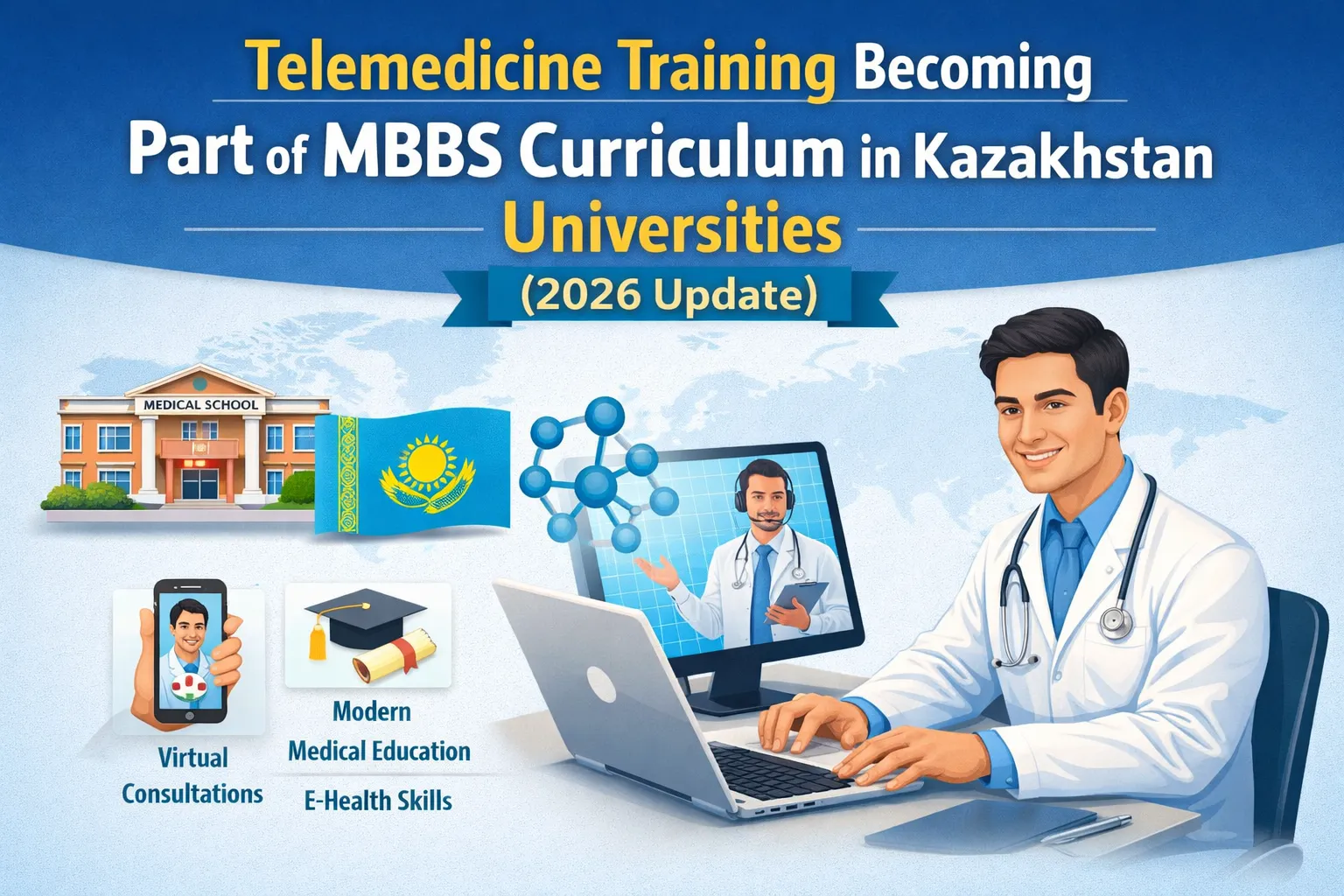
The new world of medical education is not restricted to hospital wards and classrooms. As we continue to evolve with digital healthcare, telemedicine has become integral to modern medical practice. Due to this realisation, telemedicine is currently being included in the MBBS curriculum of Kazakhstan medical universities from 2026.
This update is another big step toward future-ready medical education — blending centuries-old clinical knowledge and modern-age digital healthcare expertise — for students intending to pursue MBBS in Kazakhstan.
What Is Telemedicine, and Why Does It Matter?
Telemedicine is the practice of utilizing digital technologies to deliver healthcare services remotely. It allows doctors to:
- Consult patients through video calls
- Use digital tools to monitor health conditions
- Can diagnose and treat without ever seeing a patient
- Serve Patients in Rural or Underserved Communities
Telemedicine has gained traction across the globe in the past few years, particularly since the COVID-19 pandemic. Now having established itself as a key feature in modern healthcare systems.
Kazakhstan Is Rolling Out Telemedicine Training
In Kazakhstan, there is a bold modernization of medical education for the needs of our health care in world trends. Telemedicine Training Inclusion: The inclusion of telemedicine training was motivated by several key factors:
Digital Transformation of Healthcare
All over the world, healthcare systems are going digital. Kazakhstan is investing in:
- Smart hospitals
- Digital health records
- Remote consultation systems
In teaching students for this future, universities are integrating telemedicine into their lessons.
Alignment with Global Standards
Most universities providing MBBS in Kazakhstan are recognized for their medical programs as per international medical education criteria. Based on the establishment of best practices within the healthcare model recommended by WHO, it will be mandatory for World Directory of Medical Schools (WDOMS) affiliated institutions to prepare students in modern practice patterns such as telemedicine.
Improving Healthcare Access
Kazakhstan is also a huge country with plenty of rural and remote areas, often far form healthcare facilities. Telemedicine can help fill this gap, as it enables doctors to connect with more patients regardless of their geographical location.
Training medical students in telemedicine is important because it will ensure they can contribute effectively to these healthcare systems.
Contents[show] What Includes Telemedicine Training in MBBS
Telemedicine is not only an academic subject to be covered and forgotten, but the introduction of telemedicine in MBBS programs also includes practicalApplication and skill-based training.
Digital Consultation Skills
Students learn how to:
- Obtain informed consent for the virtual visit
- Take medical history remotely
- Provide clear and effective guidance
Tools and Software Used in Medicine
Training includes working with:
- Electronic health records (EHR)
- Diagnostic software
- Remote monitoring devices
Ethical and Legal Aspects
Telemedicine comes with responsibilities. Students are trained in:
- Patient data privacy
- Medical ethics in digital consultations
- Legal regulations of telehealth
Remote Diagnosis and Decision-Making
Students practice:
- Analyzing symptoms without physical examination
- How to do clinical decision making based on little data
- Screening cases that need to be treated face to face
Impact on MBBS Students
Training in telemedicine has many advantages for students.
Future-Ready Skillset
Today’s doctors are expected to be tech savvy. Training in telemedicine prepares students to be ready for modern healthcare systems.
Better Career Opportunities
Telemedicine is creating new career tracks like:
- Remote healthcare services
- Digital health startups
- International teleconsultation roles
Students who are telemedicine-ready hold a competitive edge.
Enhanced Clinical Understanding
Traditional clinical training, integrated with telemedicine prepares students to:
- Think critically
- Adapt to different situations
- Improve diagnostic skills
Support for Indian Students
For Indian students who are pursuing MBBS in Kazakhstan, telemedicine training can prove to be useful.
As digital healthcare becomes more mainstream in India, this experience is useful to them:
- Integrate with current Indian health-care systems
- Get ready for directives issued by the National Medical Commission (NMC)
- Give them a better chance of passing licensing exams
Real-World Applications of Telemedicine Training
It is not only a conceptual framework — telemedicine is out there being implemented in real-life venues of health management.
Students trained in telemedicine can:
- Assist in online consultations
- Work in digital healthcare platforms
- Provide remote patient monitoring
- Support rural healthcare services
This renders their education practical and relevant.
Limitations of Telemedicine in Medical Education
Telemedicine has many advantages, but it also has challenges.
Limited Physical Examination
Doctors rely heavily on physical examination. Telemedicine cannot entirely replace this, so students have to make a compromise between both ways.
Technology Dependency
Telemedicine requires:
- Stable internet
- Advanced software
- Technical knowledge
Students need to accommodate these requirements.
Learning Curve
Not all students are versed in digital tools. To feel confident and comfortable practice is the need of the hour.
Kazakhstan: A Downstream Provider of Modern Medical Education
Kazakhstan has grown to become a center for education in the modern day. The incorporation of telemedicine training is indicative of:
- Commitment to innovation
- Focus on practical learning
- Alignment with global healthcare trends
This adds to the importance of studying MBBS in Kazakhstan for international applicants.
The Role of Telehealth in MBBS Education
And telemedicine is only the tip of the iceberg. Over the next few years, we can expect to see:
- AI-based diagnosis training
- Virtual reality (VR) patient simulations
- Advanced digital healthcare modules
- Global teleconsultation opportunities
Kazakhstan is keeping pace with the emergence of this transformation in medical education turning into a more technology-oriented domain.
Why This Update Matters
For future physicians, knowing telemedicine is no longer an option — it’s a must.
Telemedicine training guarantees that students learn:
- Stay relevant in modern healthcare
- Gain practical, real-world skills
- Become adaptable and innovative doctors
Final Thoughts
Kazakhstan’s MBBS curriculum includes telemedicine training, which is a significant stride towards future-ready medical education. The shifts you see them from conventional to dynamic, technology based learning.
For students desire MBBS in Kazakhstan, this update is very much worth education for them. It preps them not only for today’s health care systems, but also gives them tools for the future of medicine. You can also plan your journey smartly using NEET Rank Predictor.
As health continues to evolve, medical doctors who understand not just clinical practice but also the digital tools are leading — and Kazakhstan is making sure its students are prepared for that future.