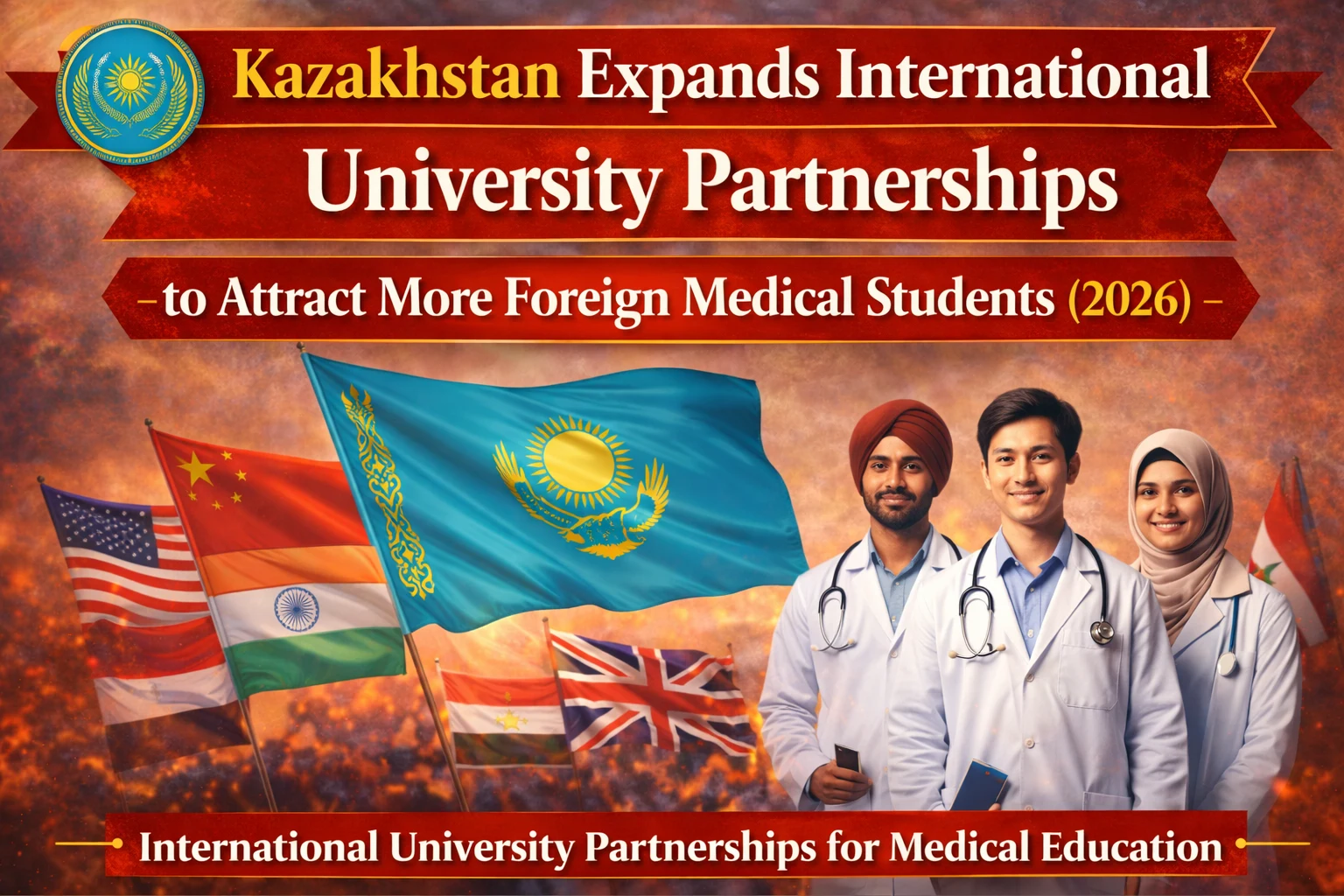
Kazakhstan has been gradually becoming one of the fastest growing players on the international higher education map for several years. In 2026, the country’s plan crystallized even further: establish strong partnerships with international universities and welcome more foreign students — especially those seeking medical education.
Kazakhstan universities are enhancing their international partnerships through collaborative research projects, exchange programs and joint campuses with institutions around the world to improve academic quality, access to top talents and bolster their position in the global markets of education.
This change is major for students pursuing MBBS in Kazakhstan. It also signals that Kazakhstan isn’t just investing in infrastructure but bringing its universities into the global academic network.
This blog post discusses why Kazakhstan is opening up wider international partnerships and how universities are working globally, but most importantly what this means for foreign medical students in 2026.
The Expanding Interest in Studying Abroad in Kazakhstan
The figures back up Kazakhstan’s rising profile as an education destination. The country is now home to over 35,000 international students of all levels and its cities including Almaty, Astana and Shymkent have emerged as important academic hubs for foreign students.
Kazakhstan gives students South Asia, Central Asia and other countries05.
- Affordable tuition fees
- Modern university infrastructure
- English-medium programs
- Growing global recognition of universities
The establishment has been encouraging universities to broaden international collaboration and academic partnership to enhance the country’s standing in the world.
The initiative has also been designed to woo more students; the programs, including MBBS in Kazakhstan, have emerged as one of the most sought after courses among international applicants.
Building Bridges: Why Kazakhstan Is Expanding Global University Partnerships
Collaboration with other countries is an important strategy in Kazakhstan’s higher education system.
Improving Academic Quality
Collaborations between Kazakh institutions and foreign universities enable the sharing of teaching methods, curriculum frameworks, research practices.
Many universities today are working with overseas institutions in Europe, Asia and the Middle East that allow for joint programs and shared experience. For instance, Asfendiyarov Kazakh National Medical University has launched cooperation agreements with hundred foreign universities and research go back in the country somewhere between Japan to Germany.
These collaborations enable universities to modernize their medical education and improvements in clinical training opportunities.
Boosting Research and Medical Innovation
MS3: Medical education goes beyond just learning in the classroom. Research and innovation are fundamental to training the doctors of tomorrow.
Collaboration on the basis of international partnerships among universities of Kazakhstan includes:
- Biomedical research
- Public health studies
- Clinical trials
- Medical technology development
Now, many universities do research joint projects with international peers so students can engage in global medical research development.
International research environment acts as shadow towards their career and academic experience for students in MBBS in Kazakhstan.
Strengthening Academic Mobility Programs
Another critical gain from international partnerships is academic mobility.
Through exchange programs, students can study abroad at partner universities for a semester or year. However, these programs give medical students the opportunity to:
- Experience different healthcare systems
- Participate in international clinical rotations
- Attend global medical conferences
- Build international professional networks
These experiences enable students to acquire an international perspective on healthcare practices.
International Partnerships Influencing Medical Education
A host of partnerships have been pivotal in consolidating Kazakhstan’s presence on the world academic stage.
Collaboration with European Medical Universities
Kazakh medical universities have established cooperation agreements with institutions in various European countries to exchange knowledge and develop joint research programs.
Students gain from not only cutting-edge teaching techniques but collaborative medical research through such partnerships.
Cooperation with Asian Medical Institutions
Japanese, South Korean and other Asian country universities also have been brought together with Kazakh universities to develop new scientific and healthcare innovations.
Partnerships like these are especially valuable in domains such as biotechnology, medical technology and public health.
Expanding Regional Partnerships
Universities are forging new links with neighbouring countries in Central Asia and the Middle East, aiming to create regional medical education networks.
These alliances facilitate opportunities for joint research efforts, student exchange programs, and regional health initiatives.
The Role of Government Support
Kazakhstan’s government has been instrumental in building international academic partnerships.
The strategy for national education emphasizes:
- Increasing global collaboration between universities
- And branch campuses of foreign institutions
- Encouraging student mobility and exchange programs
- Investing in research and innovation
Kazakhstan has further invested in education and bolstered scientific development, alongside pursuing collaborations with universities across the world in recent years.
These efforts are part of a larger goal to establish the country as a regional hub for higher educational in Central Asia.
Increasing Interest Among Indian Medical Students
Kazakhstan has emerged as a booming education destination for medical aspirants, with Indian students forming one of the largest segments studying medicine abroad.
Kazakhstan's universities for medicine are gaining popularity as more Indian students register for courses in medicine.
There are several reasons for this trend.
- Divisira medical education cost than most places
- Simple admission procedures
- English-medium MBBS programs
- International recognition of degrees
Indian students targeting MBBS in Kazakhstan must ensure the recognition of their universities.
Students must confirm that the university that they choose is NMC (National Medical Commission) approved and listed in WDOMS (World Directory of Medical Schools).
This will keep the medical degree at par with global education rights.
The Benefits of International Partnerships for Medical Students
International collaborations offer multiple benefits to foreign students.
Global Learning Environment
This makes it very common for students studying medicine in Kazakhstan to attend classes together with classmates from multiple countries. This setting enables future doctors to grasp the nuances of varied health care challenges with different cultural lenses.
Better Clinical Training
Industry alliances with major global hospitals and research institutions expose students to innovative clinical practices.
This makes medical training more practical, which is important for developing strong diagnosis and treatment.
Opportunities for Higher Studies
International partnerships also facilitate graduates pursuing graduate medical education overseas.
After completing MBBS in Kazakhstan, students can have options like:
- Licensing examinations for medical professionals globally
- Postgraduate specialization programs
- Research fellowships
- International medical internships
Recognition from orgs like WHO, and entry in directories like IMED cement credibility.
Medical Education in Kazakhstan — Future Prospects
Kazakhstan’s long-term educational strategy is to bring in more than 150,000 foreign students by the end of the decade.
In order to do so, universities are currently working on:
- Expanding international academic partnerships
- Establishing joint campuses with international universities
- Increasing English-medium programs
- Investing in research infrastructure
Based on this strategy, the medical education sector is expected to rank as one of the fastest growing sectors.
With more universities partnering, the world over students pursuing MBBS in Kazakhstan will gain access to better facilities as well as fewer global networks and career prospects.
What Prospective Students Should Consider
Kazakhstan is a great place to study, but students should first consider their decision before studying.
Important factors include:
- Accreditation and global recognition
- Clinical training facilities
- Internship opportunities
- Language support programs
- Student community and campus environment
This is particularly important for those that plan to move internationally as it's important to check if universities recognised by the National Medical Commission (NMC) and the World Directory of Medical Schools (WDOMS).
Conclusion
In its ongoing effort to position the country as a global education hub, Kazakhstan's expansion of international university partnerships in 2026 will constitute a significant build-out of an established framework for academic collaboration.
This will, through its collaborations with industries and universities across Europe, Asia and the Middle East, further strengthen academic norms and research facilities while creating a more globalised academic experience.
For international students — particularly, those wishing to employ for MBBS in Kazakhstan — those improvements appear promising. With modern medical facilities and international exchange programs, Kazakhstan’s growing education landscape is paving the way for future doctors.
The model of overseas medical education in Kazakhstan, as well as its international ties and partnerships, is a large-scale experience that will be possible to expand in the future.