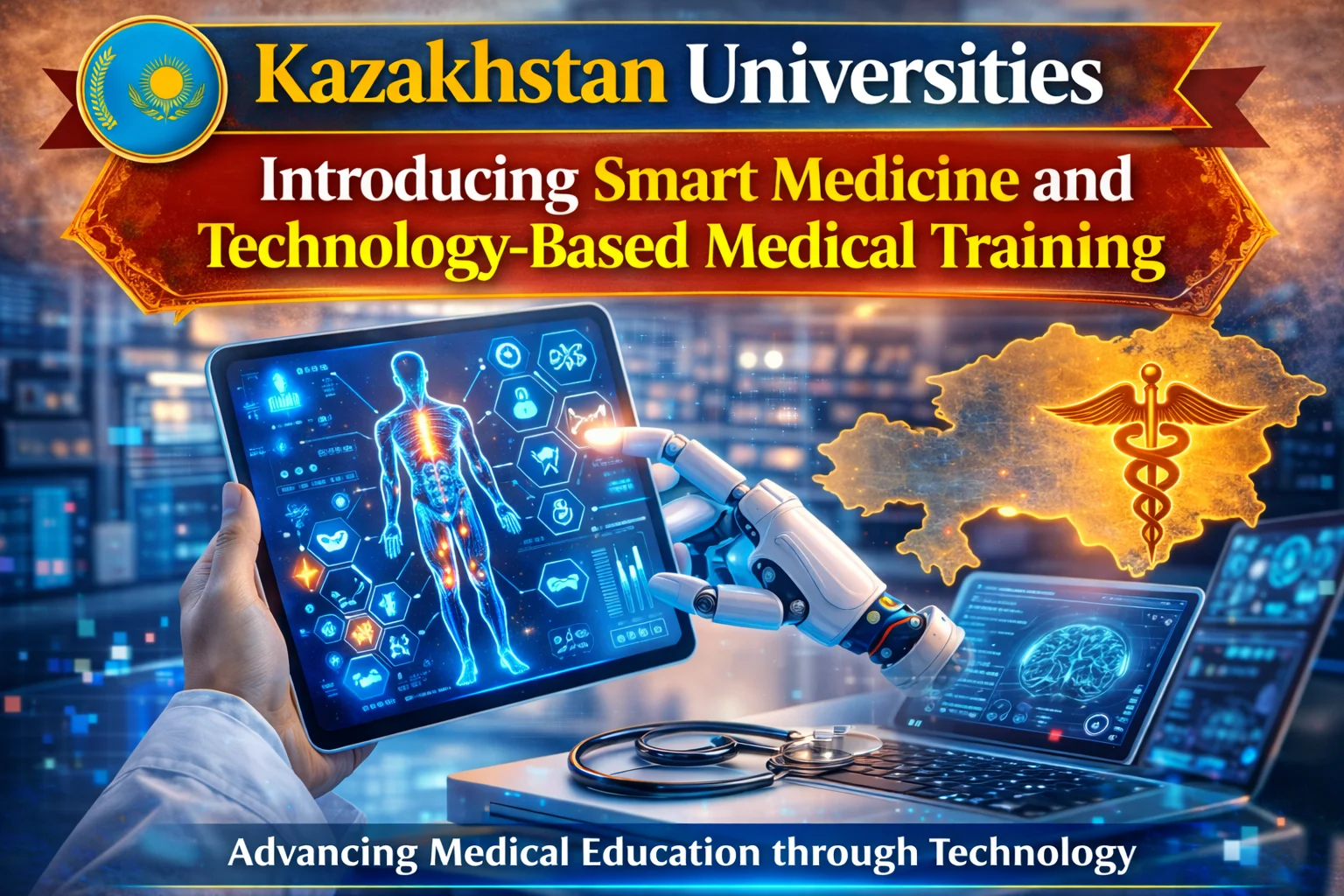
Technology has become an integral part of healthcare in general, and medical education is no exception. Modern medical universities are increasingly using new technologies to train future doctors more efficiently, from artificial intelligence and digital diagnostics to simulation-based learning and virtual anatomy labs. Kazakhstan is one of the countries pioneered by these innovations into the medical education system.
Yes, several Kazakh universities in recent years began to introduce “Smart Medicine” programs and technology-driven medical training in order to prepare students for the rapidly changing healthcare sector. These couples traditional medical education with digital technologies, simulation tools and advanced laboratory research.
For foreign students who have a plan to study MBBS, Kazakhstan this technological transformation will offer them new opportunities to pursue medicine using advanced tools that are commonly pursued anywhere in the world in hospitals and healthcare.
What Is “Smart Medicine” in Medical Education?
“Smart Medicine” is a medical education term used for how we integrate advanced technologies into medical education and healthcare training. This approach is about integrating medical knowledge with electronic tools like:
- Artificial intelligence
- Simulation technology
- Data-driven healthcare systems
It is within this context that Kazakhstani universities are embracing this idea to train a new generation of physicians who not only have expertise in clinical medicine but also the ability to apply contemporary healthcare technologies.
The International Medical School in Almaty, for example, offers a “Smart Medicine” program that aims to strengthen practical skills and familiarize students with modern medical technologies. This program aims at training doctors who are highly competent, employing novel learning strategies and digital medical tools.
This strategy is in line with broader changes unfolding in clinics, physician workforce groups and medical schools around the world, where technology is becoming an ever more important part of how we diagnose disease, monitor patients and provide health services.
Simulation-Based Training for Medical Students
A new technological trend in Kazakhstan’s medical universities is the creation of simulation-based training centers. These facilities enable students to rehearse medical procedures in a controlled atmosphere prior to interacting with actual patients.
Simulation laboratories often include:
- Advanced mannequins
- Digital diagnostic systems
- Virtual patient scenarios
This will allow students to practice procedures such as emergency response, injections, suturing and airway management with instructors guiding them through similar tasks.
By allowing students to hone their skills without the risk of harming a patient, simulation-based education helps them build clinical confidence and avoid mistakes in real-life gives toward care.
These technologies are increasingly being adopted by medical institutions in Kazakhstan to strengthen medical education and practical training. Integrating both virtual patient cases and technology-based learning into the curriculum is another way universities aid students in gaining competence in clinical decision making.
As a result, students enrolled in MBBS courses in Kazakhstan are exposed to simulated clinical situations.
Training on Digital Health and Artificial Intelligence
Artificial intelligence is emerging as one of the most consequential technologies in contemporary medicine. AI tools are being used to analyze medical data, aid in diagnosis, and enhance treatment planning.
Kazakhstan introduces AI & digital healthcare technologies in education. New research and innovation centers are being developed that explore digital medicine and telemedicine solutions.
For example, there are initiatives in place to train specialists in digital medicine and healthcare technologies at Astana IT University. These programs require research in fields like:
- Neural networks
- Mobile medical devices
- Telemedicine platforms
- Electronic health record systems
Such programs also hope to cultivate health professionals who are familiar with both medical and digital expert312ise, a highly sought combination in today’s hospitals.
This AI-based healthcare exposure system is helping in the development of innovative and competitive clinical knowledge for students studying MBBS course in Kazakhstan.
Smart University and E-Learning Platforms
Moreover, technology is also changing the setting of learning itself at Kazakhstani universities. Many institutions are building “smart campus” ecosystems built from artificial intelligence, data analytics, and digital learning tools.
These smart campuses are using advanced technologies to:
- Personalize education
- Manage academic resources
- Enhance student learning experiences
They can analyze the performance of students, recommend learning resources, and support interactive forms of education.
For example, the Smart. ENU project focuses on integrating:
- Artificial intelligence
- Big data
- Internet-of-Things technologies
to build smart educational spaces in colleges.
Networked digital infrastructure underpins interactive educational methodologies, online medical databases, and virtual collaboration between pupils and researchers.
MBBS students in Kazakhstan enjoy these technology-led campuses that give way to digital libraries, medical databases and global academic networks.
Hybrid International Medical Education Models
Kazakhstan is also implementing new forms of international education that utilize modern teaching technologies together with globally available medical curricula.
For example, the School of Medicine at Nazarbayev University has created a hybrid undergraduate medical program that is in line with both British and North American medical education systems. It provides modern clinical facilities and technology-based learning approaches for training highly qualified physicians.
The curriculum includes:
- Pre-medical training
- Higher medical training with a MD (Doctor of Medicine) degree
The focus of this international model includes research, clinical training, and up-to-date medical technologies.
These initiatives serve as evidence of Kazakhstan's aspirations to bring its medical education system up to international standards.
These global education models provide access to world-class, internationally competitive medical training for students aspiring to pursue MBBS in Kazakhstan.
Advanced Laboratories and Research Facilities
The medical field based on technology also relies on proper laboratories and research facilities.
Nearby First Medical State University, Karaganda Medical University. Just like you have Semey State Medical University and Kazakh National Medical University.
- Modern laboratories
- Simulation centers
- Research facilities
These facilities are intended to aid medical education and clinical training.
Such facilities enable students to learn human anatomy, microbiology, pathology and other medical sciences using up-to-date equipment and digital means.
Research is integrated into education so students can learn how scientific discoveries change how medicine is practiced.
Hence, Students pursuing MBBS in Kazakhstan get an exposure of practical knowledge in modern laboratories along with the scientific base of medicine.
Doctors of the Future Must Be Prepared for High-Tech Care
Global healthcare systems are experiencing a technology-driven revolution. Hospitals now rely on:
- Electronic medical records
- Robotic surgery systems
- Digital imaging technologies
- Telemedicine platforms
In Kazakhstan, medical universities have been adjusting to this trend and educating their students in technologically driven healthcare. Students learn to use diagnostic software, parse medical data and understand digital health systems.
Modern doctors operate in technologically sophisticated healthcare environments that require expertise in both medicine and technology.
This technology-oriented education in Kazakhstan is beneficial for career readiness and expands opportunities within global healthcare systems, especially with respect to MBBS candidates (international students).
International Recognition and Standards
While inserting advanced medical technologies into the education system, Kazakhstan universities are also sustaining international academic standards.
Here are some of the global organizations that recognize many of the medical universities in the country:
It is also the message around the globe from health organizations, including the WHO, which highlight technology and innovation as key to dealing with pandemic preparedness and strengthening of health systems worldwide.
Kazakhstan improves the international credibility of its medical education system, combining world recognition with training based on modern technology.
Conclusion
Kazakhstan is covered by educational programs "Smart Medicine" and integrates technology-based training in its universities. With the help of artificial intelligence, simulation labs, digital healthcare systems and foreign education models, it has equipped tomorrow's doctors with skills to take on modern medicine.
These innovations are helping Kazakh universities design learning environments which integrate technologies and medicine to deliver enhanced medical training.
Moreover, this transformation comes with numerous benefits for international students, specifically for those seeking an MBBS in Kazakhstan. Students have access to cutting-edge learning technologies, state of the art research facilities and globally aligned medical education programs.
As the country progresses on its investment in digital healthcare education and smart medical technologies, Kazakhstan universities are progressively becoming key nodes of technology-enabled medical education in Central Asia.