In the last decade, Kazakhstan has quietly transformed itself into one of the fastest-growing international education destinations. What was once considered a budget-friendly alternative has now evolved into a strategic academic choice — driven by quality education, global exposure, and expanding career pathways.
This transformation is especially visible in medical education. With rising international enrollment and global recognition of institutions, pursuing MBBS in Kazakhstan is no longer just about affordability — it is increasingly about opportunity, research access, and long-term global mobility.
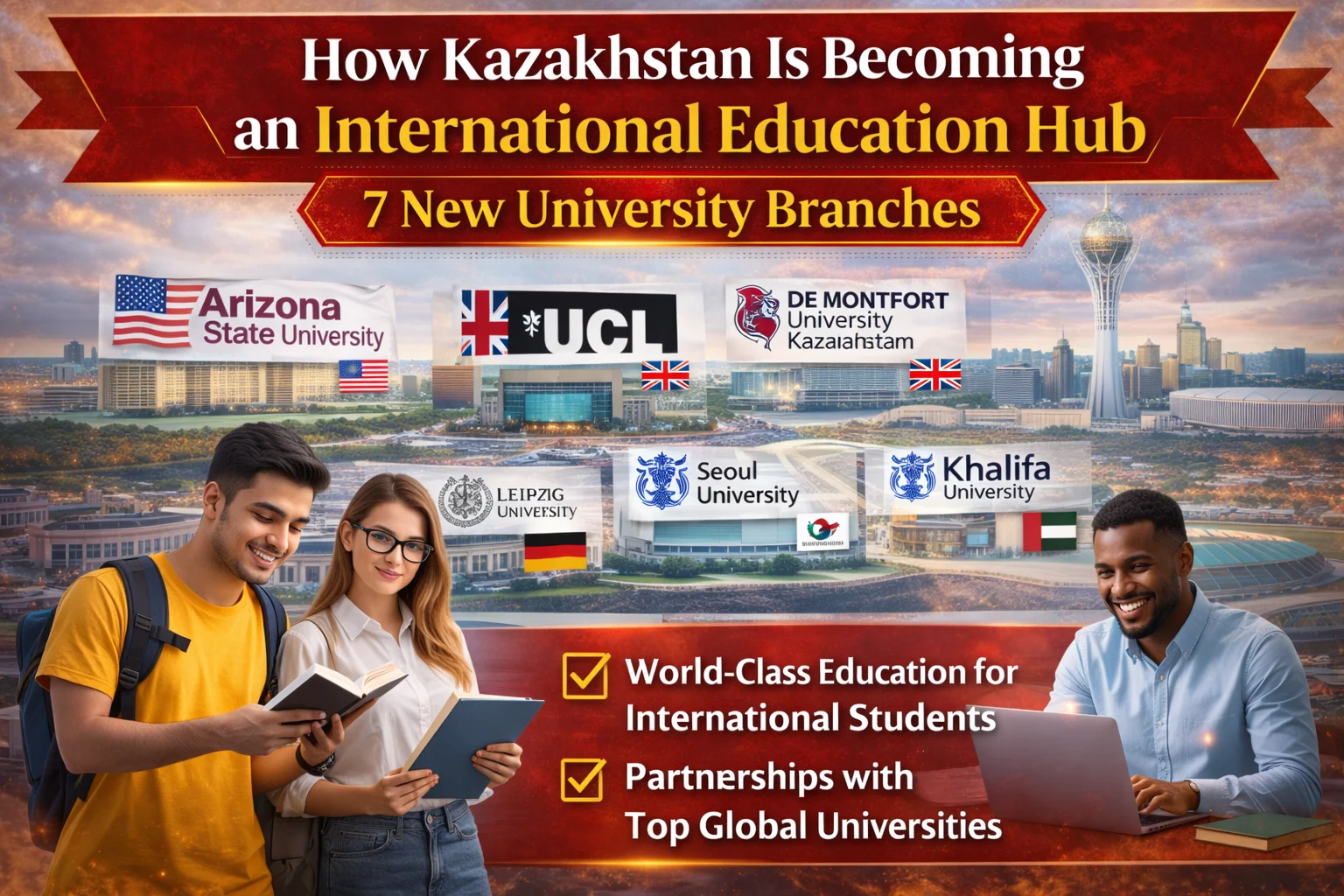
In this blog, we explore the broader transformation and 7 new university branches and initiatives shaping Kazakhstan’s global education leadership in 2026.
The Bigger Picture — Why Kazakhstan Is Rising on the Global Education Map
Before we dive into the new branches, let’s understand what’s driving this shift.
1. Strategic Location Connecting Europe & Asia
Kazakhstan’s geographic position between Europe and Asia makes it a natural academic bridge. Students from:
- South Asia
- The Middle East
- Africa
- Eastern Europe
are increasingly choosing Kazakhstan as a gateway to international exposure.
2. Growing Global Recognition
Several universities are listed in the:
- World Directory of Medical Schools
- Recognized under frameworks aligned with World Health Organization
This ensures international credibility — particularly important for students planning to:
- Return to India
- Appear for global licensing exams
- Pursue postgraduate education abroad
3. Policy Alignment with Global Health Standards
Educational reforms are increasingly aligned with international health frameworks. This reflects:
- Curriculum modernization
- Research-focused training
- Public health preparedness
4. Adaptive Skilled Migration Policies
Kazakhstan has introduced flexible policies to attract global talent. As visa norms tighten elsewhere, Kazakhstan positions itself as:
- A student-friendly nation
- A mobility-supportive academic environment
7 New University Branches Driving Global Leadership
Here are the emerging institutions and initiatives drawing international attention:
1. International Medical University of Central Asia — Almaty Campus
The Almaty branch represents a major step toward medical internationalization.
What makes it notable:
- Enhanced research laboratories
- International accreditation collaborations
- English-medium MBBS programs for foreign students
This campus reflects Kazakhstan’s push toward higher clinical education standards.
2. Kazakh National Research Medical University — Global Health Innovation Hub
One of the country’s oldest medical institutions has introduced a Global Health Innovation Hub.
Key features:
- Research collaborations with European & Asian institutions
- Specialized programs in public health and preventive medicine
- Joint-degree opportunities
This strengthens Kazakhstan’s presence in global health research.
3. Astana International University — Global Outreach Expansion
This university is expanding international partnerships.
Highlights:
- Dual-degree programs
- Exchange opportunities
- Curriculum aligned with international benchmarks
It enhances academic mobility for international MBBS aspirants.
4. Eurasian Medical & Natural Sciences Academy — Innovation Branch
This private institution has launched an innovation-focused division.
Programs include:
- Biotechnology research
- Health informatics
- Digital diagnostics
Students benefit from early exposure to conferences and academic publishing.
5. International University of Central Asia — Cultural Exchange Campuses
This university has expanded to multiple regional campuses.
Distinctive elements:
- Language immersion programs
- Industry-linked collaborative projects
- Integration support systems for foreign students
It promotes multicultural learning beyond classrooms.
6. Kazakhstan Tech University — Biomedical Sciences Division
Traditionally technology-focused, this university has introduced a biomedical sciences expansion.
Why this matters:
- Integration of medicine with bioengineering
- Medical technology innovation
- Collaboration with healthcare research centers
It creates interdisciplinary pathways for future-ready doctors.
7. International Faculty of Health Sciences — Joint Campus Initiative
A collaborative campus formed by international and Kazakh institutions.
Offers:
- Exchange semesters
- Interprofessional health programs
- Shared global research laboratories
It blends global context with localized application.
What These Expansions Mean for Students
These developments signal structural transformation — not just infrastructure growth.
A Truly Global Classroom
- Diverse international student population
- Cross-cultural peer learning
- Global exposure within Central Asia
Enhanced Academic Credibility
Recognition under directories like WDOMS and alignment with WHO-backed standards strengthens degree value for:
- Licensing examinations
- Postgraduate admissions
- Research careers
Expanded Career Pathways
Policy reforms and global partnerships open access to:
- International internships
- Work placements
- Research fellowships
Graduates are increasingly positioned as global medical professionals.
Stronger Student Support Systems
New campuses emphasize:
- Mentorship programs
- Housing assistance
- Language training
- Medical insurance support
This improves both academic and emotional well-being.
What Students Should Carefully Evaluate
Growth brings opportunity — but due diligence remains essential.
Recognition Status
If planning to return to India, verify recognition with:
International Directory Listing
Confirm inclusion in:
- World Directory of Medical Schools
Student Support Infrastructure
Check for:
- English-medium instruction
- Hostel facilities
- Safety measures
- International student advisory cells
Final Thoughts
Kazakhstan’s rise as an international education hub is strategic — not accidental.
With expanding university branches, global collaborations, and curriculum reforms aligned with international standards, the country is positioning itself as a serious global education destination.
For students considering MBBS in Kazakhstan, the decision today goes beyond cost — it increasingly represents:
- Academic diversification
- Global exposure
- Research integration
- Long-term mobility
The next phase of Kazakhstan’s educational journey looks dynamic — and for international students, it may well be transformational.