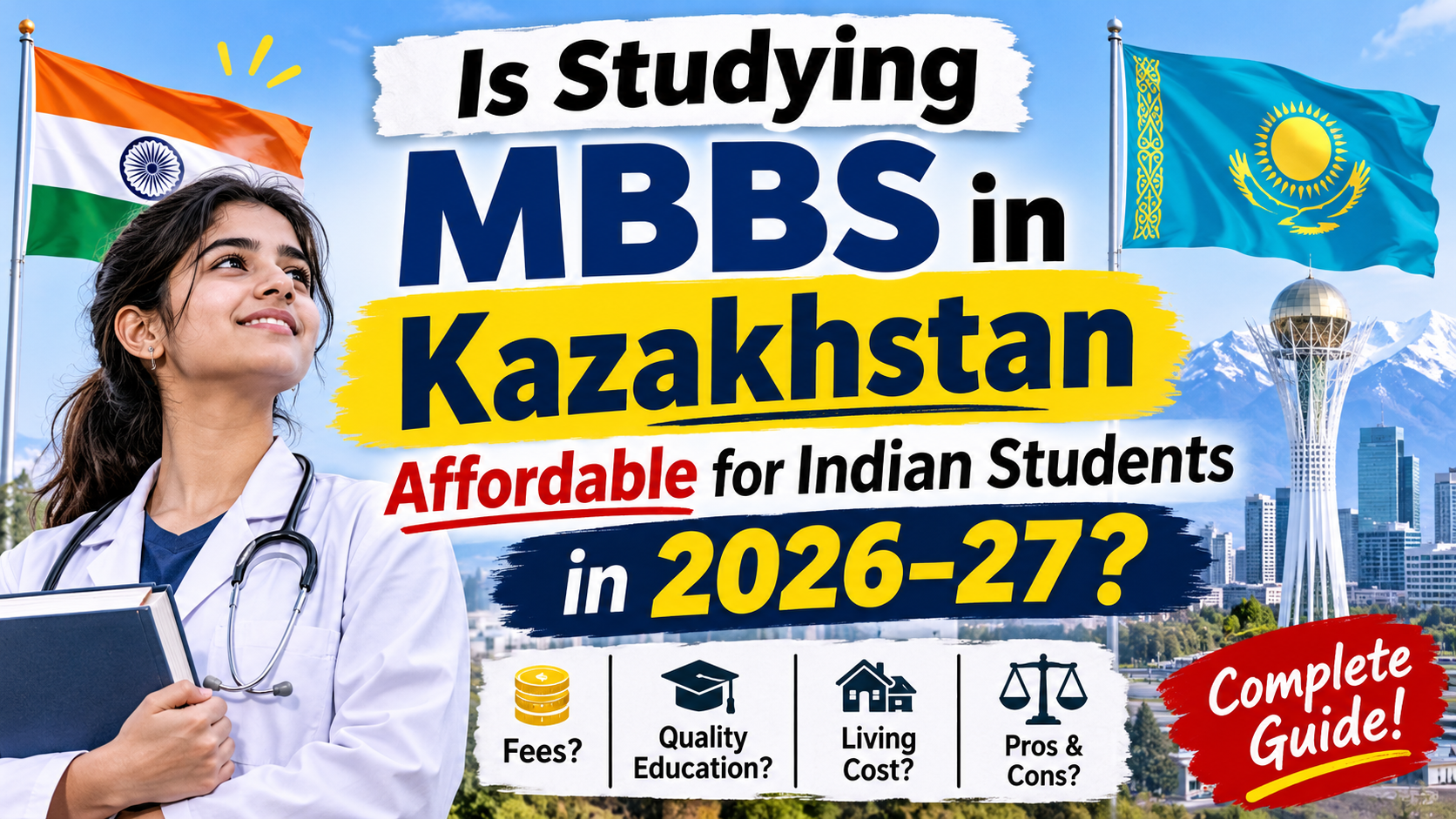
Is MBBS in Kazakhstan Affordable for Indian Students in 2026–27?
Many Indian students consider studying medicine abroad because of the limited availability of government medical seats and the high fees charged by private medical colleges. Kazakhstan has become a popular destination for Indian students interested in medical education, offering several medical universities, an international student community and comparatively affordable study options.
However, whether studying MBBS in Kazakhstan is affordable in 2026–27 depends on the overall cost of education. Students and parents should consider all expenses when calculating their budget. These include accommodation, food, transportation, visa, insurance, university fees and other personal expenses. Students should also check the programme duration and current requirements for studying medicine abroad and obtaining medical registration in India. This guide covers the main expenses, practical ways to save money and important factors to consider when planning an MBBS budget in Kazakhstan.
Why Is Kazakhstan Often Considered Affordable?
Kazakhstan is often considered by Indian families because studying medicine there may cost less than attending many private medical colleges in India. Several universities offer medical programmes for international students, including some with English-medium instruction. Students can explore universities in cities such as Almaty, Astana, Karaganda and Semey. They can compare institutions based on tuition fees, accommodation, teaching facilities and clinical exposure.
However, students should not select a university simply because it offers the cheapest admission package. Some universities may charge slightly higher tuition fees but provide better facilities, accommodation and student support. Families should compare the overall cost with the quality and suitability of the programme.
Students exploring MBBS in Kazakhstan should research university details and verify all admission-related information before making a decision.
MBBS in Kazakhstan Tuition Fees for Indian Students in 2026–27
Tuition fees vary depending on the university, programme, language of instruction and admission category. Some universities publish their fees in Kazakhstani Tenge (KZT), while others quote them in US dollars (USD).
For example, Astana Medical University has published its 2026–27 tuition fees for international students. Its English-medium Medicine programme is listed at 3,000,000 KZT for international students in the first year. The published fee schedule should be checked to understand the applicable charges for the same admission intake in subsequent years. Other universities may have different fee structures. Students should request the official tuition fee schedule for their selected course and admission year.
What Affects Tuition Fees?
- University: Public and private university fees may differ.
- Language: English-medium programmes may have different fee structures.
- Length of the programme: The total duration of the course affects the overall tuition expenditure.
- Additional university fees: Registration, examinations, laboratory facilities and other services may involve separate charges.
- Annual fee revisions: Students should confirm whether tuition fees remain fixed throughout their programme.
Always request a written breakdown of tuition fees and additional university charges before making a payment.
Overall Costs of Studying MBBS in Kazakhstan
Indian students should consider more than tuition fees when planning their education budget. Accommodation, food, local transportation, insurance, international travel and personal expenses also contribute to the overall cost. According to the official Study in Kazakhstan website, the approximate cost of living in Kazakhstan is around USD 300–600 per month. Actual expenses depend on the city, accommodation type and individual lifestyle.
Expenses to Consider While Budgeting
|
Cost category |
Details |
|
Tuition fees |
Annual university fee for the medical programme |
|
Accommodation |
University hostel or private rental |
|
Food |
Groceries, hostel meals and eating outside |
|
Transport |
Local public transport and occasional taxis |
|
Visa and registration |
Visa-related and migration registration expenses |
|
Medical insurance |
Insurance coverage and medical checks |
|
Flights |
Initial travel and future return journeys |
|
Books and study materials |
Textbooks, stationery and academic materials |
|
Personal expenses |
Clothing, mobile services and daily necessities |
Students should confirm what the university currently includes in its accommodation and other packages. Some institutions may provide certain services as part of the hostel fee, while others charge separately.
Why Can Overall Costs Vary?
A student staying in university accommodation and preparing meals independently may spend less than someone renting a private apartment and frequently eating outside.
Other factors that can change the total budget include:
- Airfare and travel dates.
- Currency exchange rates.
- Annual university charges.
- Accommodation deposits.
- Personal spending habits.
- Changes in the duration of the medical programme.
Families should keep some additional money aside for emergencies rather than allocating their entire budget to tuition and routine living expenses.
Which Cities Could Be More Affordable?
The city where a student chooses to study medicine can influence monthly expenses. Accommodation, transport, food and lifestyle costs vary across Kazakhstan.
Almaty
Almaty is a major educational and cultural centre with universities, shopping facilities, public transport and student services. However, students should compare university hostel costs with private accommodation before making a decision.
Astana
Astana is the capital of Kazakhstan and has established educational institutions, including Astana Medical University. Students should consider heating expenses, winter clothing and seasonal living requirements while preparing their budget.
Karaganda
Karaganda is another city Indian students may consider. Students should compare accommodation charges, transport facilities, university location and available student services.
Semey
Semey is another option for students exploring medical education in Kazakhstan. Before admission, students should check the university's academic environment, clinical exposure and accommodation facilities. Students should not select a city only because it appears cheaper. University quality, clinical training, course compliance and student safety are equally important.
Seven-Year Course Duration Advisory for 2026–27
One important factor to consider when applying for admission in 2026–27 is the updated medical course duration in Kazakhstan.
According to an advisory issued by the Embassy of India in Astana on 1 October 2026, the standard duration of the medical course under Kazakhstan's new policy is seven years. International students may have the opportunity to complete the programme in six years through an accelerated pathway, subject to specified conditions. The Embassy also mentioned that it did not have clear confirmation about whether international students completing the accelerated programme would receive a licence to practise medicine. Students should check the applicable requirements with their university and the relevant Kazakh authorities.
How Does the Course Duration Affect Your Budget?
If a student assumes that the programme will finish in six years but eventually needs to study for seven years, the family may face additional expenses for:
- Tuition fees.
- Accommodation.
- Food and daily living.
- Transportation.
- Insurance and other personal expenses.
Before applying for admission, students should obtain written confirmation of:
- The official duration of the medical programme.
- Whether the student will follow the standard or accelerated pathway.
- The academic and licensing conditions applicable to the selected pathway.
- Whether the programme meets the requirements relevant to Indian students.
- The additional expenses involved if the programme takes seven years.
Do not assume that every international student will complete the course in six years when calculating the total education budget.
NMC Rules Indian Students Should Consider
Affordable fees are important, but students must also ensure that their foreign medical qualification meets the applicable requirements for future medical registration in India.
The National Medical Commission (NMC) has specified requirements for Indian students pursuing primary medical qualifications abroad under the Foreign Medical Graduate Licentiate Regulations, 2021. These include requirements relating to course duration, English as the medium of instruction, and appropriate theoretical, practical and clinical training.
Students should carefully review the applicable regulations and official updates available on the National Medical Commission website.
Important Requirements to Check
1. Course Duration
Ensure that the complete medical programme meets the applicable NMC requirements. Due to the recent course-duration advisory in Kazakhstan, this is particularly important for students applying in 2026–27.
2. Medium of Instruction
Confirm that the programme is taught in English as required under the applicable regulations. Do not rely only on an agent's verbal assurance.
3. Clinical Exposure
Understand where clinical rotations and practical training will take place. Confirm that the programme provides the necessary clinical exposure and that the arrangements are documented.
4. Internship
Understand the internship structure, duration, location and connection with the main medical programme. Ask the university to explain how its arrangements meet the relevant Indian requirements.
5. University and Course Verification
Check the university's current status and the exact details of the medical programme. A listing in the World Directory of Medical Schools (WDOMS) does not automatically guarantee eligibility for medical registration in India.
Students can refer to the official World Directory of Medical Schools to check medical school information. They can also visit the World Health Organization website for official global health information.
These organisations and resources serve different purposes. Students should not treat a university listing or an international organisation's information as a substitute for checking the applicable NMC requirements.
NEET Requirements for Indian Students
Indian students planning to pursue an undergraduate medical course abroad should check the NEET qualification requirements applicable to them.
NEET qualification is an important consideration for Indian students who want to study medicine abroad and seek medical registration in India in the future. Students should review the latest information issued by the National Testing Agency (NTA) and the relevant NMC regulations.
The official NEET NTA website provides examination-related notices, eligibility information and updates.
Before paying any admission fees to a university, students should:
- Confirm that they meet the applicable eligibility requirements.
- Keep their NEET scorecard safe.
- Maintain copies of their academic documents.
- Check the latest official admission and regulatory guidelines.
Tips to Save Money on MBBS in Kazakhstan
Careful financial planning can help students manage their expenses throughout their medical education. A few practical changes can make a difference to the monthly budget.
1. Choose Accommodation Carefully
University accommodation can be a practical option for students who want to stay within their budget. Compare hostel fees, facilities, heating, internet, security and distance from the university.
2. Plan Food Expenses
Students can save money by cooking simple meals, purchasing groceries in advance and limiting frequent restaurant visits.
3. Use Public Transport
Understand the local transport system and check whether student discounts are available. Using public transport for regular travel can be more economical than depending on taxis.
4. Book Flights in Advance
When travel dates are confirmed, booking flights early may help reduce travel expenses. Students should also keep some money aside for emergency journeys.
5. Monitor Currency Exchange Rates
Tuition and other university charges may need to be paid in KZT or USD. Currency exchange rates can change, affecting the amount Indian families pay in rupees.
Check the applicable exchange rate and bank transfer charges before making an international payment.
6. Understand Consultancy Charges
Ask for a written breakdown of consultancy fees and the services included. Avoid paying unexplained additional charges. University tuition should be paid only through payment channels officially confirmed by the institution.
Additional Costs to Consider
Some expenses may not be included in the initial admission package. If families do not plan for them, these charges can create financial pressure.
Common additional expenses include:
- Medical tests and health certificates.
- Visa processing and migration registration.
- Health insurance and annual medical checks.
- Winter clothing and seasonal necessities.
- Books, medical instruments and laboratory items.
- Accommodation deposits and maintenance charges.
- Additional travel during holidays.
- Currency exchange and international banking fees.
The Embassy of India in Astana has published information about medical insurance options for Indian students, including an advisory in August 2026. Students should check the latest information about available coverage, eligibility and costs rather than assuming that insurance is automatically included in university fees.
How to Choose an Affordable and Suitable Medical University
Students should not select a university simply because it offers the lowest tuition fee. Comparing the academic and financial details of multiple institutions can help families make a more informed decision.
University Selection Checklist
Before admission, make sure you:
- Verify that the university is legitimate and authorised to offer the medical programme.
- Request the official 2026–27 tuition fee schedule.
- Check the complete course duration and academic pathway.
- Confirm English-medium instruction and clinical exposure.
- Understand the internship requirements and where it will take place.
- Review accommodation, food and student support facilities.
- Ask about additional charges and possible annual fee increases.
- Verify the programme against current NMC requirements.
- Read and understand the refund policy before transferring money.
- Keep copies of the admission letter, fee receipts and university correspondence.
Students can compare universities such as Astana Medical University, Karaganda Medical University and Semey Medical University. The final decision should be based on verified programme details, academic suitability and the overall cost of education.
Is MBBS in Kazakhstan Worth the Investment in 2026–27?
For some Indian students, studying medicine in Kazakhstan may be a cost-effective option. The availability of medical programmes for international students and a variety of universities makes the country worth researching. However, students and parents should consider the complete cost of the programme. Tuition, accommodation, living expenses, travel, insurance and potential changes in course duration can all affect the final investment. The standard seven-year course duration is particularly important for 2026–27 admissions. Not all international students will necessarily complete the programme in six years, and the accelerated pathway should not automatically be assumed to satisfy every licensing requirement. Families should carefully evaluate the overall cost, quality of education and eligibility for future medical practice in India. Verifying these details before admission can help prevent unexpected expenses and academic difficulties.
Frequently Asked Questions (FAQs)
1. Is MBBS in Kazakhstan affordable for Indian students in 2026–27?
It can be a comparatively affordable option for some families. However, the total cost depends on the university, programme, accommodation, living expenses and course duration. Students should calculate the complete education budget before applying.
2. What are the tuition fees for MBBS in Kazakhstan?
Tuition fees vary depending on the university and programme. For example, Astana Medical University's published 2026–27 fee schedule lists 3,000,000 KZT for its English-medium Medicine programme for international students in the first year. Students should always request the official fee schedule for their selected university.
3. How much does accommodation cost in Kazakhstan?
Accommodation expenses vary depending on the city and type of accommodation. University hostels may help students manage their budgets, but they should confirm current fees, facilities, deposits and additional charges directly with the university.
4. Can Indian students complete MBBS in Kazakhstan in six years?
Not necessarily. According to the Embassy of India in Astana advisory dated October 2026, the standard duration under the new policy is seven years. International students may have the opportunity to complete the programme in six years through an accelerated pathway, subject to specified conditions. Students should verify their exact course structure.
5. Do Indian students need to qualify for NEET?
Indian students should meet the applicable NEET qualification requirements for foreign medical education and future registration in India. They should check the latest guidelines issued by the NTA and NMC.
6. Does being listed in WDOMS guarantee NMC eligibility?
No. Being listed in the World Directory of Medical Schools does not automatically guarantee eligibility for medical registration in India. Students must independently verify whether their university and programme comply with the applicable NMC regulations.
Conclusion
Studying MBBS in Kazakhstan can be a cost-effective option for some Indian students in 2026–27. However, choosing a suitable university and understanding the complete financial commitment are essential before applying. Compare official tuition fees, accommodation, living expenses, insurance and travel requirements. Most importantly, check the standard seven-year course duration, the conditions of any accelerated pathway and compliance with the applicable NMC requirements. By researching universities carefully and preparing a realistic budget, Indian students and their families can make a more informed decision about medical education in Kazakhstan while planning for their future careers.