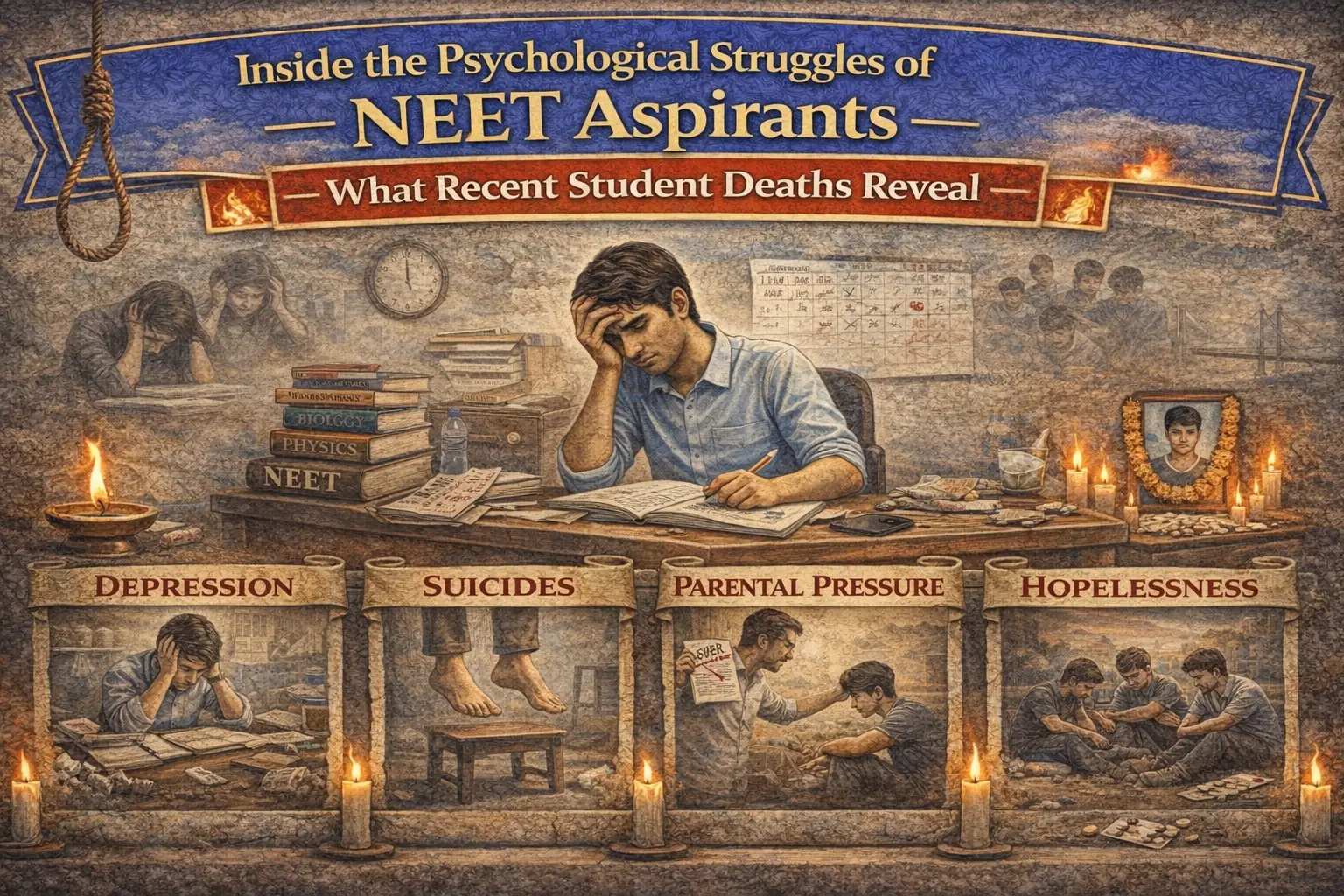
Behind the glossy success stories of NEET toppers lies a dark shadow: the psychological wreckage left on lakhs of aspirants who don't make the cut. Recent tragedies—a 17-year-old jumping before a train in Kota just last month, marking 2026's first coaching hub death—expose raw cracks in India's medical entrance madness. With over 13,000 student suicides yearly and NEET-linked cases spiking post-results, these aren't random breakdowns; they're symptoms of unrelenting pressure that pushes teens to the brink. For those eyeing escape routes like
, understanding this mental toll could mean choosing life over the ledge.
Every hour, a student in India takes their life, many tied to exams like NEET. Kota's factories amplify it: 18 suicides in 2025, after 26 the year before. Females, often 65% of cases, hang themselves citing "failed family honor." But why? Let's peel back the layers revealed by notes, studies, and survivors—then spotlight healthier paths abroad.
The Isolation Trap: Away from Home, Under Siege
Picture a 16-year-old from rural Bihar, dropped in Kota's hostels amid 2 lakh strangers. No family hugs, just 14-hour study marathons and public mock test rankings that brand you "loser" if you're outside top 100. Loneliness festers—sleep vanishes, replaced by anxiety loops: "What if I fail Mom's sacrifices?"
Studies show 44% of these kids battle severe depression; 30% have panic attacks. First-year drop-ins feel it worst—no coping toolkit for the grind. Phone calls home? Pressure valves that burst: "Rank better or don't call."
Performance Anxiety: One Exam, Lifetime Verdict
NEET isn't a test; it's identity. Qualify? Maybe government seat. Miss by 10 marks? Crores in private fees or repeat years. Leaks like 2024's erode trust, forcing grinds anew. Brain science says chronic stress shrinks prefrontal cortex—decision-making tanks, impulsivity soars.
Suicide notes scream it: 22% blame "NEET failure." Post-results peaks hit hard—9 deaths in September 2020 alone. Males dominate (77%), but girls internalize deeper, linking medicine to marriage prospects.
Family Expectations: Love Turned Weapon
Parents mean well, mortgaging farms for 5-10 lakh coaching fees. But "doctor ban jaao" becomes shackles. Rural families see NEET as poverty escape; failure? Shame. One Haryana teen's last words: "Can't face Dad." Generational trauma cycles—unspoken: "We suffered so you succeed."
This perfectionism breeds black-white thinking: Pass = worthy; fail = worthless. No room for Plan B.
Toxic Coaching Culture: Fear Over Learning
Kota thrives on dread. Institutes pit students against each other—weekly ranks posted like scoreboards. Bottom feeders get "counseled" out. No play, no breaks—adrenal fatigue mimics depression.
Experts call it "learned helplessness": Effort feels futile when odds are 20 lakh vs. 1 lakh seats. Add hostel food poisoning outbreaks, extreme Rajasthan summers—bodies break before minds.
Hidden Disorders: Depression, Anxiety Unchecked
78% of 2020 NEET suicides tied to exam anxiety; mental health mentions in 22%. Yet stigma rules: "Therapy? For weaklings." Undiagnosed ADHD worsens focus fails, spiraling shame.
Geographic hotspots? Rajasthan (70% cases), Tamil Nadu. Younger victims (81% aged 15-20) lack resilience tools—life skills absent from CBSE.
The Physical-Mental Link: Burnout's Deadly Spiral
14-hour days wreck circadian rhythms—insomnia feeds irritability. Poor nutrition, no exercise: cortisol floods, mimicking paranoia. Sudden deaths rise too—20 non-suicides in Kota 2024 from heart attacks.
Hanging leads (76%), poisoning next—impulsive acts in fractured states.
What Recent Deaths Teach Us
January 2026's Kota train jumper: Late train frustration boiled over. Notes evolve: Early ones blame self; later, system—"Coaching killed me." Supreme Court dubs it "epidemic," demanding reforms.
PubMed trends: NEET > JEE suicides, post-2022 surge. Interventions lag—posters don't save lives.
Breaking Free: MBBS in Kazakhstan as Mental Lifeline
NEET qualified but rank-low? Abroad flips the script. No yearly repeats, no Kota hell—steady six-year path at 15-25 lakhs total. English classes start September, practicals year four.
NMC approved unis via WDOMS ensure validity; FMGE pass 20-30% with prep. Indian communities (12k strong) host Diwali, cricket—homesickness fades.
One escapee: "Kota anxiety gone; Kazakhstan rebuilt me."
Spotting Red Flags Early
Parents: Watch withdrawal, rage, score-hiding. Daily chats—no rank grilling. Apps like Wysa for AI therapy.
Aspirants: Journal fears, 10-min walks daily. Normalize "good enough."
Building Resilience: Practical Tools
- Mindfulness: Headspace 5-min sessions.
- Peer circles: Share burdens, not shame.
- Diversify: Eye BSc Nursing, abroad MBBS.
- Helplines: TeleMANAS 9152987821.
Role of Schools and Government
CBSE must embed coping curricula. Cap fees, mandate counselors. Promote
WHO verified abroad options—no more "India-only" bias.NExT could fairer-ize, but till then, destigmatize alternatives.
Success Beyond Suicides: Survivor Insights
Theresa from Tamil Nadu: Panic mid-Kota, switched Kazakhstan. "Steady pace healed anxiety; FMGE cleared."
Ravi: "Rankings crushed soul—abroad let me learn."
Parents' Playbook: Love Without Labels
Praise process: "Proud of your grind." Explore MBBS in Kazakhstan early—no last-minute panic.
Conclusion
Recent deaths rip the veil: NEET pressure isn't grit—it's poison. Psychological scars run deep, but paths like MBBS in Kazakhstan offer healing with purpose. Save a life—yours or a loved one's—by choosing balance over burnout. Share signs you've seen; let's spark change.