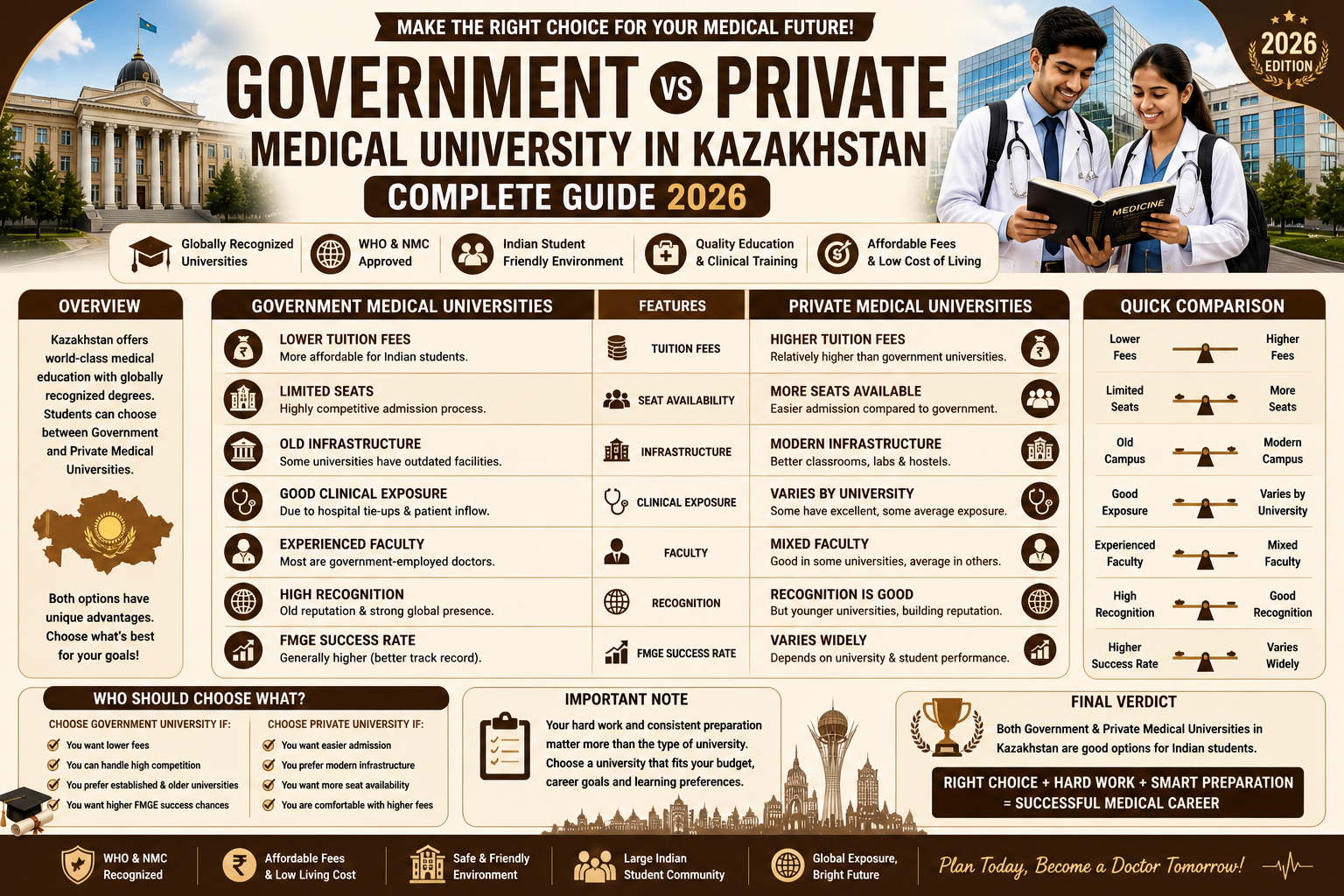
For aspirants willing to pursue MBBS in Kazakhstan, the decision of whether they want to study at government or private medical universities in Kazakhstan is one of the most important ones. They both provide globally recognized degrees, though their fees, reputation, infrastructure and admission process vary. By understanding these differences, you can choose what better fits your budget and career goals.
Kazakhstan Medical University Summary
Kazakhstan has both government-funded and privately run medical universities, all of which are regulated by national education authorities and many have international recognition. The majority of your institutions will be recognised on International directories and have structured MBBS paths (5years + internship).
Popular Kazakh Government Medical Universities
The Government universities are the oldest, and they have existed for a longer time now, so most people prefer them simply due to their higher credibility and affordability.
Leading Government Universities:
- Kazakh National Medical University
- Astana Medical University
- Karaganda State Medical University
- Semey State Medical University
Key Features:
- Lower tuition fees (approx. $3,000–$5,000/year)
- Highly acknowledged in the world (NMC, WHO, WDOMS)
- Experienced faculty and research exposure
- Wider hospital network for clinical training
Pros:
- Affordable for middle-class students
- High credibility and reputation
- Strong clinical exposure
Cons:
- Limited seats and higher competition
- Larger class sizes
- Older teaching methods (e.g., in some colleges)
Kazakhstan Private Medical Universities:
Private unis are much newer and apply more modern teaching methods and put students at ease.
Leading Private Universities:
- International Medical School
- Kazakhstan International Medical University
- South Kazakhstan Medical Academy
Key Features:
- Higher tuition fees (approx. $4,000–$7,000/year)
- Modern infrastructure and digital classrooms
- Low teacher-to-student ration
- Easier admission process
Pros:
- Less competition for admission
- Better facilities and modern labs
- Student-friendly environment
Cons:
- Greater fees than state universities
- Confirmation varies (Should confirm NMC approval)
- In some cases, less established reputation
Direct Comparison Between Government and Private Universities
Factor
Government Universities
Private Universities
- Tuition Fees
- Lower ($3k–$5k/year)
- Higher ($4k–$7k/year)
- Recognition
- Strong, widely accepted
- Varies by university
- Admission
- Competitive
- Easier
- Faculty
- Highly experienced
- Mixed
- Infrastructure
- Traditional + established
- Modern + advanced
- Clinical Exposure
- Strong hospital tie-ups
- Moderate to good
- Class Size
- Larger
- Smaller
- Reputation
- High
- Developing
Which One Should You Choose?
Choose Government Universities If:
- You want low-cost education
- You prefer strong global recognition
- Aspiring to return to India and pass licensing exams.
Choose Private Universities If:
- Easy admission with less competition are what you wish for
- You like modern infrastructure and small batch
- You can bear bit more costs
Key Insight for Indian Students
Whether it is a government university or a private university, make sure that the university/ duly recognised by the National Medical Commission and enlisted in the World Directory of Medical Schools. It is required for getting to appear in licensing examinations like FMGE/MExT in India.
Final Verdict
Government universities are a better deal, offer better credentials and exposure to clinical work
Private Universities staff may give you a refreshing change (flexibility, comfort & modern methods of learning)
There is simply no correct answer, and it depends on your budget, your academic goals, and plans for the future. So the decision to choose medical college is well thought out and gives you a footing not only in admission but also your future career as a medical professional.