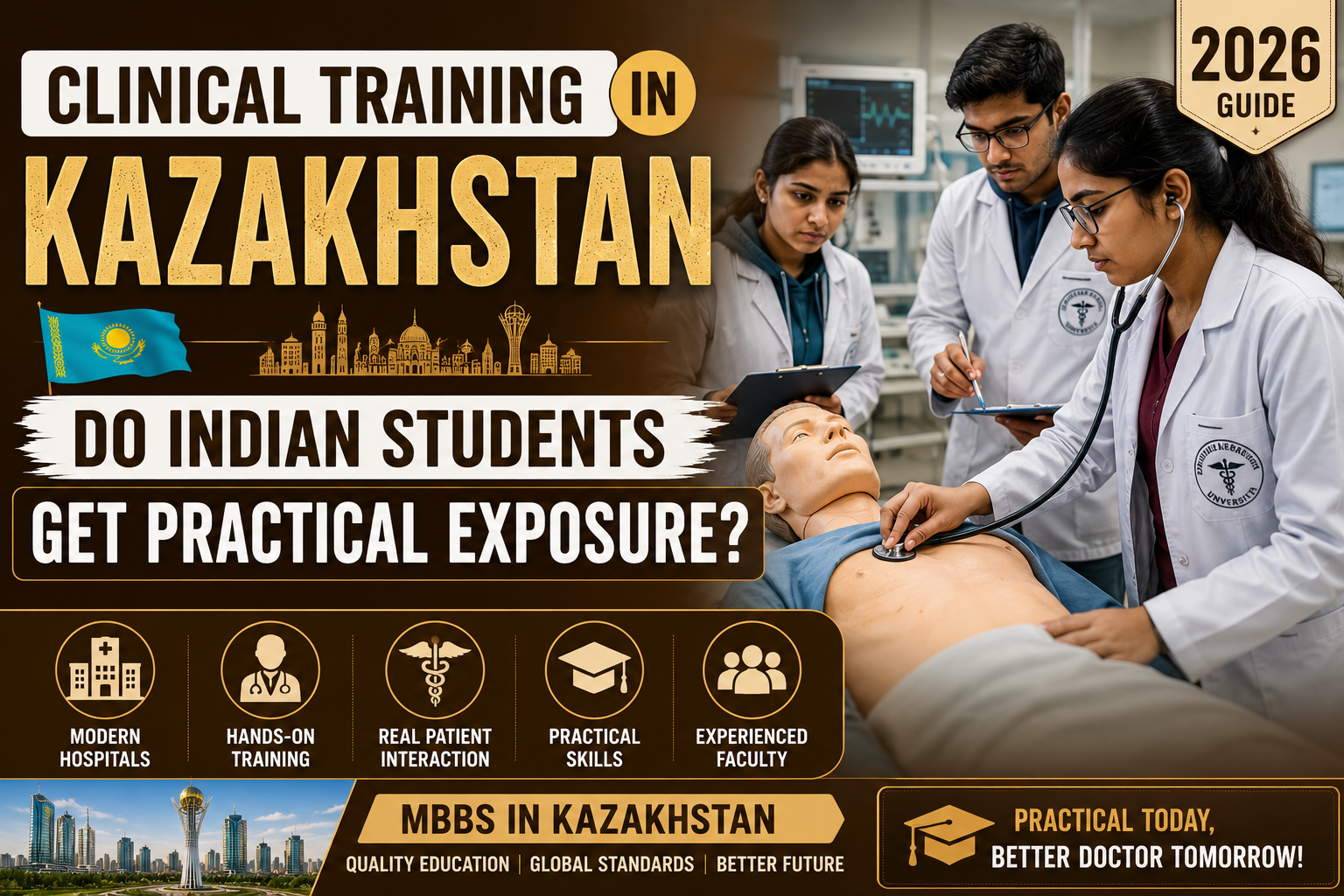
One of the major fears for students is definitely practical exposure when they pursue MBBS in Kazakhstan. The fact is obvious — clinical training is present in Kazakhstan, but its completeness depends on the university and the student himself.
When Does Clinical Training Start?
Clinical exposure is introduced gradually:
Years 1–2: Emphasis on basic sciences and theory
Year 3: Intro to hospitals and observing patients
Years 4–5: Continuity of clinical postings and ward exposure
Year 6: Full-time internship
This phased approach allows students the opportunity to establish a strong foundation upon which they are able to transition into the real clinical environments with more context.
Nature of Practical Exposure
Clinical training comes in stages. Early on, students do more observing as their role primarily entails watching physicians care for patients, obtaining patient histories and going to bedside teaching sessions. With time they begin helping with minor clinical tasks and engaging in patient interaction (under supervision). Later on, students get to be more engaged in diagnosis and case discussions, which really develops clinical skills.
Hospital Rotations and Departments
These cadaver sessions are distributed throughout their first-year anatomy courses while clinical years, they rotate through several major departments:
Core Departments:
General Medicine
Surgery
Pediatrics
Obstetrics & Gynecology
Emergency Care
These rotations will enhance students' exposure to various health problems and therapies. This experience across departments ultimately develops confidence and enhances clinical understanding.
Internship and Hands-On Training
Year Three is all practical:
Work in hospitals daily
Assist doctors in patient care
Maintain case records and reports
The final stage of internship is quite important as it connects what has been learnt in theory with practical life, and gradually prepares a candidate for professional responsibilities.
Challenges Faced by Indian Students
Some common challenges include:
Language barrier with local patients
Variation in patient flow by universities
Passive participation resulting in lower exposure
These problems are solvable with the acknowledgement that they exist and effort on part of the student.
How to Improve Clinical Exposure
How Students Can Improve Their Learning:
Learning basic Russian/Kazakh for communication
Actively participating in ward rounds
Questioning and Case discussion
Practicing clinical skills regularly
Clinical exposure significantly enhances clinical knowledge when students take initiative rather than strictly relying on formal teaching.
Importance for Indian Licensing Exams
Clinical exposure correlates directly with FMGE exam performance. Understanding the concept well and knowing how to relate it with clinical based question solving not only makes you feel confident but also allows for better application of knowledge. Students also need to check if their university is recognized by the National Medical Commission, which keeps them eligible for practice in India.
Final Conclusion
Kazakhstan students also get a good amount of practical exposure during MBBS, and the system is created to develop clinical skills after starting your studies. Instead, it largely depends on the amount of initiative that a student is willing to take in order to learn!
To put that another way, Kazakhstan sets the stage, however, hard work and engagement coupled with thoughtful preparation are what transforms opportunity into effective clinical experience.