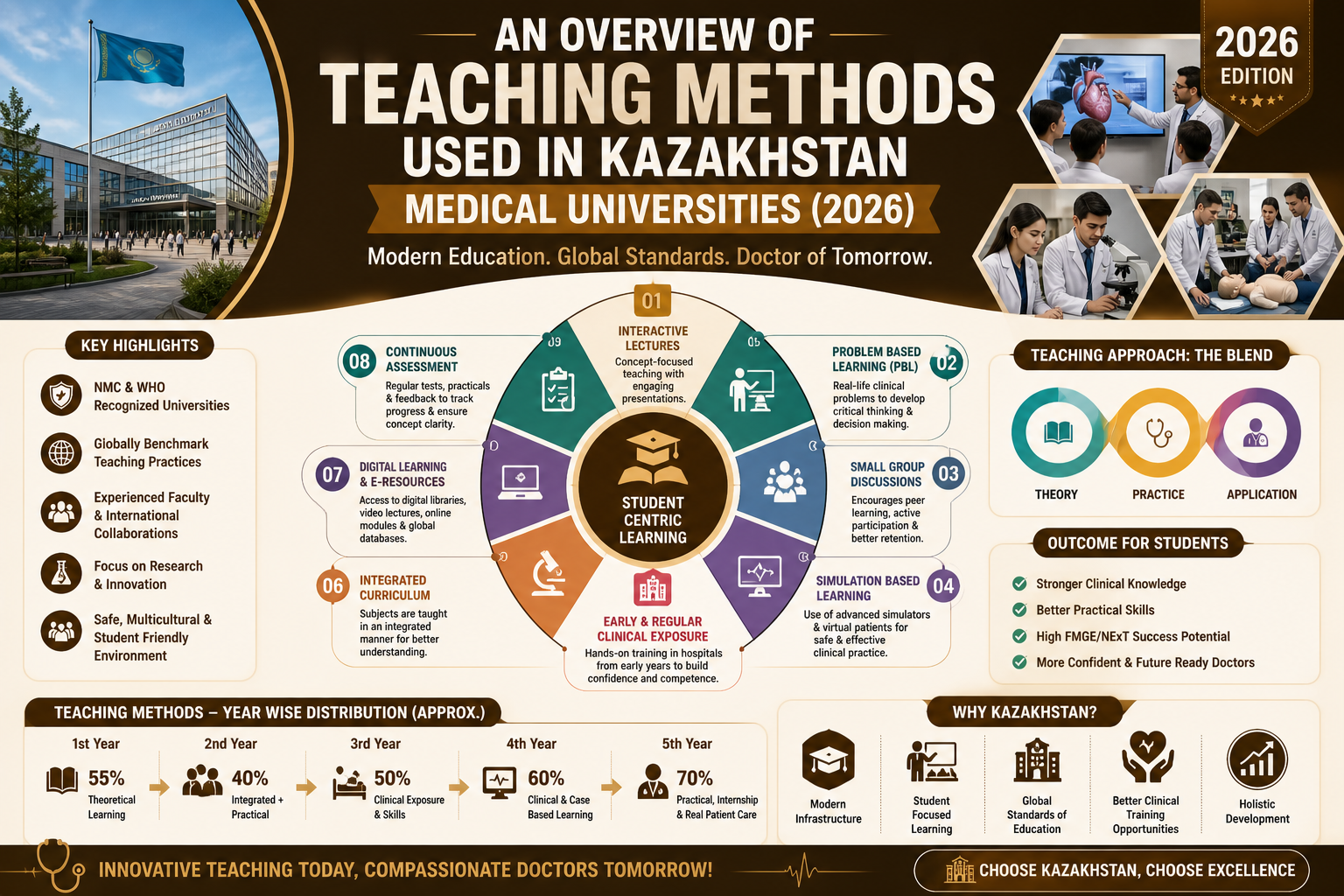
Kazakhstan medical universities adopt a hybrid approach by incorporating both traditional lectures and contemporary methods of clinical skill teaching. Since the outcome of these techniques directly influences clarity of each concept developed by a student, clinical skills and also performance in licensing exams where Indian students can pursue their academic path further for MBBS in Kazakhstan — we need to understand these methods of study at heart.
Core Teaching Approach
Most medical colleges had adopted systematic European-style curriculum in medicine which consists of:
- Pre-clinical phase (1st–2nd year)
- Para-clinical phase (3rd year)
- Clinical phase (4th–6th year)
It starts with learning in the classrooms, but as time goes by, then the system will get out of the classroom and get into a hospital.
Classroom-Based Learning
During the first years, training is mostly theoretical and consists of:
- Easily deliver both English language and in day seminars
- Approaching smart classrooms and digital presentations
- Viva examination and internal assessments regularly
Anatomy Physiology Biochemistry has a very conceptual base.
Practical and Laboratory Training
Universities of Kazakhstan Focus on Practical Education Along With Theory
- Cadaver dissection is used to teach the anatomy
- Physiology, pathology, & microbiology lab
- You shall get to know our pioneering training system through the mannequins and models based simulation learning
This motivates better conceptual processing of the medical contents prior to clinical exposure for students.
Clinical Teaching Methods
From third year onwards, teaching takes on a more hands-on and patient focused approach:
- Bedside teaching in hospitals
- Case-based discussions and clinical presentations
- Watching and helping with medical procedures
- Broad rotations in Medicine, Surgery, and Pediatrics
Clinical training is provided in the form of supervised clinical practice in attached hospitals and specialist units.
Problem-Based Learning (PBL)
Numerous universities are in the verge of integration of the Problem-Based Learning (PBL) method where:
- Students analyze real-life medical cases
- D. Emphasis on diagnostic, therapy planning and clinical reasoning however
- Encourages independent learning and teamwork
This technique is specifically significant for exams worldwide.
Use of Technology in Teaching
Kazakhstan medical universities use modern methods of integrating technology in education:
- E-learning platforms and online resources
- Video Lectures and Digital Study Material
- Virtual simulations for clinical scenarios
This makes learning more accessible and flexible.
Language of Instruction
The Medium of Instruction during MBBS is English
But in clinical training students work with patients in Kazakh and Russian.
There is basic language training to help students communicate better
Assessment and Evaluation System
Students are assessed using:
- Written exams (MCQs and theory)
- Practical exams and lab assessments
- Viva voce (oral exams)
- Clinical case presentations
By making ongoing assessments, students will have to fulfil academically too.
Challenges in Teaching Methods
Although the system works, students may experience:
- Transition to a new way of teaching
- Language barriers during hospital training
- Importance of self study to get fit with Indian Exams Pattern
Alignment with Indian Standards
As per the guidelines of NMC the system of teaching must be compatible for Indian students. This is especially important as preparation for licensure exams such as the FMGE or next steps in NExT.
Also, recognition from bodies like WHO and listing in WDOMS ensures global acceptance, while qualifying NEET remains essential for Indian students. Additionally, students should always verify updates through NEET's official portal.
Final Conclusion
Kazakhstan universities have implemented innovative methods to combine traditional academic education with modern clinical training. The system provides a groundwork but students need to approach self study and clinical practice in a full vibrant manner.
With focus on National Medical Commission guidelines and catering to student needs, a preventive approach can pave the way for robust medical knowledge to aid success in licensing exams around the world.